What happens if David Cameron switches to the No side in the EU referendum?
(note: this is a counterfactual – just in case you’re reading it after October 2015!)
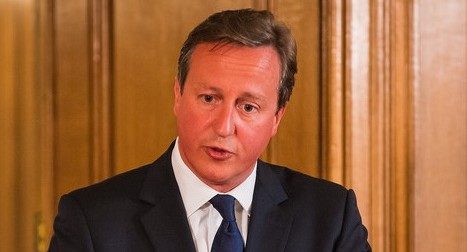
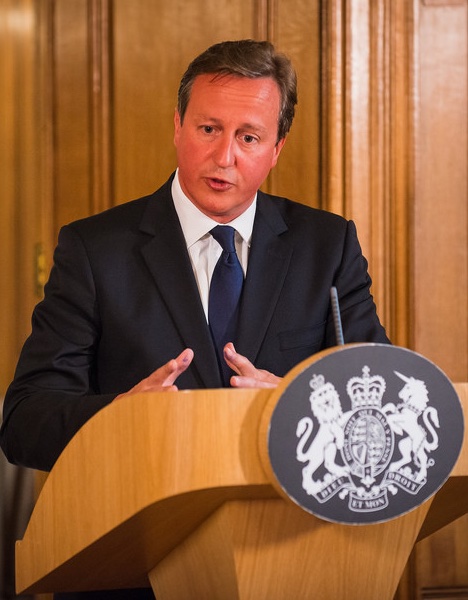 It is Wednesday 21st November 2015, and David Cameron has called a press conference at Downing Street. With his face going rather puce, the anger showing in the edge to his voice, he delivers the news that pro-EU campaigners in the UK had feared: that he has changed his mind and switched to the NO side in Britain’s in-or-out of the EU referendum.
The final straw had been the European Council of 15th/16th October 2015 in Brussels. Cameron had announced the referendum would take place in September 2016 just a few weeks after his May 7th election victory, yet he had then prevaricated when it came to making concrete demands about the UK’s renegotiation of its EU membership since the 25th/26th June 2015 European Council, and at the October summit overplayed his hand. A demand for fundamental changes to EU freedom of movement had been rejected by the other 27 Heads of State and Government, and Cameron stormed out of negotiations at 1am and had refused to speak to the press. Sources close to the UK Permanent Representation (UKRep) had told the Financial Times that Cameron had been briefed on what the other Member States would accept, but had persevered regardless.
European Council President Donald Tusk, looking tetchy and strained, had told the cameras lined up in Brussels that negotiations had been “difficult” but had refused to be drawn on what should happen. Merkel, Hollande and Renzi in their separate press conferences gave very similar messages. No country should be allowed to blackmail the rest of the EU they said.
The FTSE opened 200 points lower on Monday 19th October, and in the hours before Cameron’s announcement hit its lowest point in five years.
(end of counterfactual)
OK, so can you imagine this? I can, and something like it happening sometime in the next 6 months should not be discounted.
Cameron has form on this – see his behaviour when wielding a ‘veto’ on 2011 (but not stopping the rest of the EU advancing anyway), and when Cameron was outvoted 26-2 on the appointment of Jean Claude Juncker as Commission President. In both cases Cameron had ways out before being forced into a corner, and was briefed about what was going to happen, but proceeded nevertheless. His flashes of impulsive, bullying anger led to him being labelled Flashman.
I also think Cameron wants the UK to stay in the EU as a result of pure pragmatism – there is no conviction, no belief in this issue for him. Britain ought to stay more because the alternative is worse, and not because the EU is – in his eyes – anything worth fighting for. It is for this reason that I do not think it is inconceivable for his position to change.
What would then happen to the pro-EU side if Cameron switched? In the short term it would be hell – there would be genuine panic (not least in the markets, and in the EU institutions) that the UK would leave. But if it were handled sensibly, and framed in a way that Cameron had behaved irresponsibly, it could be the unifying factor the pro-EU side would need. Keeping the UK in against Cameron’s wishes would finish him and his government, politically, and demonstrate that the backbenches of the Tory party should not be allowed to dictate the UK’s EU policy. The Labour Party – that ought to be rebounding by autumn 2015 anyway – would be unified in backing Britain in the EU and opposing Cameron.
So Cameron switching is a risk, yes, but it would not be insurmountable. The other 27 EU Member States, and the European Commission, need to bear this in mind when trying to negotiate with Cameron. That he may switch sides is not inconceivable, but if he does it is not a foregone conclusion that he would win the country round to his changed view.
When asked about supporting no, Cameron (on TV last year) said: “I rule nothing out.” I read this to mean he could e.g. resign before leading a ‘No’ campaign. Let’s hope so.
Cameron, is undoubtedly a terrible leader, weak strategist and appalling statesman. My hope is that because he does not want to get reelected in 2015, he will do what is right for the country, and support an IN vote, having obtained some small changes to the rules in favour of the UK. There are unlikely to be any changes of much substance, but he’s locked himself in this corner now, and the only way out is to argue for some changes, sell it to his Eurosceptic colleagues as something great for the UK – Queen and country and all of that nonsense, and hope they stay muzzled during the run up to the referendum.
If Cameron does switch to the “Get Britain out” camp, it would be for party management reasons, brought about by not only a complete failure to not only to sell what he got “from Brussels” to his party, but also a failure to persuade his Eurosceptic colleagues that he should, like them, at least be allowed to campaign for he believes is “right for the country”. (at the moment the Tories maintain their gentleman’s agreement: we all have a right to campaign on what we believe).
His futile 2011 veto and anti-Juncker stance were not emotionally driven. Rather they were more to prove his Eurosceptic credentials to his sceptic backbenchers (and UKIP leaning tory voters in the 2015 General Election). Like the absurd withdrawal of UK Conservatives from the EPP group (which also weakened his standing amongst key EU leaders not to mention UK influence), they are primarily in David Cameron’s party political strategic interest (i.e. remaining leader of the Conservative party). Question is: how far would Cameron go in putting party before country?
Not to also forget: Cameron’s days are in any case numbered thanks to his decision not to run for a third term as PM.
I don’t know whether your response was angling for me to provide a statement of confidence in Cameron’s strategic leadership. If so, you’ll be disappointed – I’ve no confidence in either his judgement or the strength of his opinions, and can quite easily see him succumbing to craven opportunism if the polls don’t strengthen.
But if a referendum can’t be won on the strength of the arguments within the next 18 months, there will be no better time thereafter; and if it really can’t be won, then it’s better for everyone that there is some sort of clarity.
And if it really can’t be won, I’ll hopefully be able to join the queue for the Scottish Passport Office before the 1972 European Communities Act gets repealed.
Fair points, Donald, but with one exception – what possible strategic interest did it serve for Cameron to behave as he did in 2011, or over Juncker? He lost face with EU leaders and looked weak. He did what he did in those situations due to an emotional response in the heat of the moment. What’s not to say he does not behave the same way this time?
I also can’t see this happening, unless the Tory backbenchers are completely unmanageable over the next year or so. What possible strategic interest of Cameron’s could it serve? If he switched, it’d be clear to everyone that his backbenchers pushed him to it, and moreover that he couldn’t convince anyone either back home or in Brussels to give him even a meaningful figleaf of “leadership” or “influence”. That’s no way to maintain your credibility with the electorate (and don’t forget that Cameron consistently polled better than the rest of his party). Even if he “won” a referendum for No, the realities of a paper-thin majority remain, and he’d still be eaten up by the wolves shortly thereafter.
I dread the next referendum campaign, however the PM is positioned, because of the awful spectacle of the previous one in Scotland, where the establishment argument was uninspiring, dull, negative and cautious, looking for a technical victory-on-points rather than anything a person could aspire to. However, the saving grace of having a Tory government now, is that if the referendum results in a vote to stay in, there is less at risk of the sour-grapes losers asking for a rerun in a few years than would have been the case if Labour was in charge now. In much the same way that people often say that only the Likud government could deliver a lasting peace in the Middle East, I think only sceptics can deliver a lasting settlement to the Britain-and-Europe question.
Certainly true that the referendum is not in Labour’s power, but it doesn’t inspire me about the strength of the pro-European cause on the Labour benches.
@Jennifer – I hope Cameron has learned something too, but I am far from certain about that. Plus I think the people he trusts and listens to are as deluded about this as he is.
As for Labour – I don’t pay any attention to Burnham, Kendall or whoever else committing to an in-out referendum – there is no way it will be in their power (or not) for this vote to go ahead now, so for me it’s neither here nor there whether Labour supports the principle of the vote or not. And I’d personally trust Kendall more than Burnham on that point in any case, as what he has said about free movement over the weekend sounds about as bad as what Cameron has said.
Hi Jon,
Very interesting post. I completely agree with you that David Cameron wants the UK to stay in the EU purely for pragmatic reasons. So on the same grounds, I can’t imagine him advocating a no vote. You are right he has form on putting himself into a corner – but surely even he has learnt something from the phantom veto and the Juncker vote.
Personally, I am more concerned, or at least as concerned, about the current crop of Labour leadership contenders, who are all “passionate” pro-Europeans, but seem to go along with Cameron’s thinking that the UK can get the rest of the EU to sign up to some fundamental changes asap. An ‘in/out’ referendum for the sake of it, endorsed by Liz Kendall and Andy Burnham, is pure politics and no way to get any of the reforms they supposedly want from the EU.
It would be good news for the Labour party if your counterfactual scenario came off, but I can’t see it happening. And I wish I could feel more optimistic that the Labour party will be rebounding by the autumn…