Every five years Brussels has a bout of political intrigue. It is the time when a new European Parliament is elected, and connected to that, a new team of European Commissioners chosen. The European Parliament elections are due in May 2014, and with the Commission due to be chosen in the autumn of 2014, speculation in Brussels is already starting about who could be in line for the top positions. I will blog about this issue over the coming few months, but as a point of departure I am going to look at the position of the Party of European Socialists, and what they might do about the Commission.
Why does the PES position matter? Essentially since the entry into force of the Treaty of Lisbon, the President of the European Commission is to be ‘elected’ by the European Parliament. So if a party wins the EP elections (or at least end up as the largest group) then they should get the Commission President job too. In 2009 the Party of European Socialists did not agree on one candidate for Commission President, and lost the elections anyway. I still doubt the PES’s chances in the election, but they could at least be the first party to try to unify behind a candidate, and have a sort of primary process in place to make the decision about a candidate.
So who are the likely candidates, if the PES can get its act together?
 Martin Schulz [Wikipedia]
Current role: President of the European Parliament
Nationality: German
The clear favourite. Schulz has positioned himself in Brussels as the main spokesperson for the centre left, previously as leader of the S&D Group in the European Parliament, and more recently as President of the European Parliament. His 1970s retro trade union leader style might not appeal to everyone, but he is a professional operator and decent speechmaker. His institutional views that lean towards federalism scare some peripheral Member States and his nationality might count against him, as might the fact that he has never held a position in a national government.
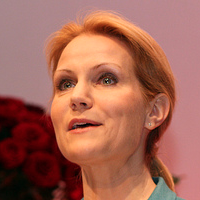 Helle Thorning Schmidt [Wikipedia]
Current role: Prime Minister of Denmark
One of the few partial success stories for the centre left in recent years was the return to power of a centre left coalition in Denmark in 2011. This means that former MEP Thorning’s name is often mentioned in connection with top positions in Brussels. However her government is suffering in the polls only two years into her term, so leaving to the Commission might look like leaving a sinking ship. It is also very hard to place Thorning ideologically – this may or may not be an advantage depending on your view of the Commission. Would be the first female Commission President if successful.
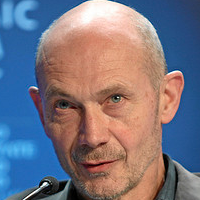 Pascal Lamy [Wikipedia]
Current role: Director-General of the World Trade Organisation
Nationality: French
Lamy would bring considerable experience and gravitas to the role. He is also a former European Commissioner for Trade and comes from the pragmatic side of the French socialists, while his WTO experience would reassure the centre right. He speaks excellent English, is a good communicator, and would bring a calm assurance to the role. His lack of national experience, time away from the EU mainstream, and possibly his age, could count against him. He would however be my personal choice for the job.
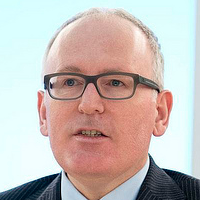 Frans Timmermans [Wikipedia]
Current role: Foreign Minister of the Netherlands
Another of the minor successes of the left in recent years has been the return to government in the Netherlands of the Partij van de Arbeid, and Timmermans is one of the most senior politicians from the party in government. His wide experience of foreign affairs and EU politics would be assets, but having only been Foreign Minister since November 2012 means he has even less experience at the very highest level than Thorning. Would he want to leave a national role so soon? His nationality – from a core Eurozone country – would count in his favour.
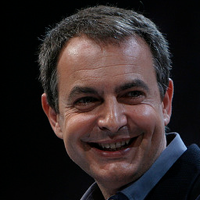 José Luis Zapatero [Wikipedia]
Former role: Prime Minister of Spain
Spain was one of the great success stories for the centre left in the 2000s, and Zapatero was the symbol of that. Subsequent economic experience there perhaps shows his administration in a different light however. His considerable governmental experience counts in his favour, although his nationality and poor quality spoken English are perhaps against him. His commitment to the European Union while he was Prime Minister was sometimes questioned, not least when he nominated the centre-right Barroso for Commission President in 2009.
Outsiders
Borut Pahor (President of Slovenia), Sergei Stanishev (former Prime Minister of Bulgaria), Wouter Bos (former leader of the Dutch Labour Party), José Sócrates (former Prime Minister of Portugal), Werner Faymann (Chancellor or Austria).
If I’m missing anyone please do suggest names in the comments. And no, Tony Blair is not a viable candidate – that is why he is not listed here.
[UPDATE 27.4.13, 2300 – minor corrections to the Timmermans bio, and Faymann added]
[UPDATE 27.4.13, 2345 – via Twitter, Ronny points out the nomination process]
[UPDATE 1.5.13, 1400 – the best additional suggestion (in comments below) so far is Paul Magnette, chairman of Belgium’s PS. Skilled and clever, albeit rather inexperienced, he might have what it takes]
| Posts about EU top candidates 2014 President of the Commission: EPP, PES, Others | President of the European Council | High Rep for EU Foreign Policy |
Image credits – all Creative Commons / Sharealike licensed
Martin Schulz by European Parliament | Helle Thorning Schmidt by Arbeiderpartiet | Pascal Lamy by World Economic Forum | Frans Timmermans by United Nations – Geneva | José Luis Zapatero by Parti Socialiste
I would judge former PM Persson’s time slighlty differently,, not as black&white; he e.g. assigned the would be future party leader Anna Lindh to the position as Foreign Minister, knowingly we had the 1st Swedish EU presidency in 2001; where she excelled. He gave the EU-presidency a prominent place in Swedish politics, improved his English skills remarkadbly, and boosted Swedish EU-opinion. Fair enough, he was not driving in the Euro-elections, given rather half hearted support, but given the present crisis, this was/is perhaps not surprising. If he wants to, he would probably be most keen.
I would not rule out Margot, she has a high level position experience; and I believe she would be tempted for such a position outside of national, Swedish party politics-there is a major difference in this respect to being at EU-levels, IMHO.
Indeed, Emma Bonino would be a similar good candidate, same background as ex-commissioner as Wallstrom, plus now active as Foreign Minister.
Ulf – Margot would be super, but has said she has retired from active politics. That’s why I did not include her. Persson never showed much interest in EU affairs as Swedish Prime Minister – any reason to think differently now?
Excellent blog posting. Many thanks. I would like to enter two suggestions, former Swedish PM, Göran Persson, or Former EU-Commissoner Margot Wallstrom. Similarily, they could also be Council President candidates too.
Polish PM Donald Tusk, PO is on an informal short list for the President of EC. He has support of Angela Merkel and Jerzy Buzek. He may be considered for a President of the European Council too.
Two more posts in this series:
High Rep
President of the European Council
I applaud Jon Worth for animating the discussion:
http://grahnlaw.blogs.fi/2013/05/17/the-real-engine-of-european-integration-jon-worth-16002696/
If we’re talking about prominent Norwegians… Eva Joly for President!
Judging from the original list and the names being dropped by commenters, it dawns on me that Jens Stoltenberg is a frontrunner here. Oh, in a parallel universe, I mean.
@Edmund (2nd comment) – no, I think Wallström is serious. She’s a decent, straightforward person and I trust her word.
@Evan (1st comment) – Poul Nyrup Rasmussen resigned as President of the PES very suddenly, due to illness as far as I was aware. So I think that rules him out. He’s also rather elderly now. Almunia is rather low profile in BXL but sure would not be bad. High Rep speculation – I will write a separate post about this 🙂
Also note that all EPP candidates are analysed here.
I would agree but we must not forget about issues in local politics, like as I explained about non possibility of Fredrik Reinfelt being the EPP’s candidate due the issue of his coalition in the Riksdagen (Swedish parliament) in the upcoming elections of 2014.
Although I like him, don’t ask Elio to speak in Dutch. 😀
Evan,
I would agreed with you about M. DiRupo, a good candidate with his negotiating skills, but the fact that he is Belgian, with von Rompuy as European Council President and Belgian government would collapse again as there isn’t a good replacement for him means that he is impossible to have.
Sorry, Elio.
Haha, absolutely. No, my talk of Elio is purely wishful thinking, alas… especially since Belgium is also having its national and regional elections in 2014…
During a workshop in the EP on the 8th, Swoboda actually answered the question who the PES candidate will be with “our candidate has spoken before us” refering to Martin Schulz who was the previous speaker. So that settles that.
I don’t think Van Rompuy is an obstacle, as he’s stepping down soon anyway. The lack of an obvious alternative, on the other hand, means Elio won’t take the plunge and run. Shame… would be quite cool to have a working class openly gay bowtie wearing president of the Commission.
Can we also get started on the High Rep speculation? If the EPP holds onto the European Council and Commission presidencies, the Socialists will get Ashton’s job again. So…
– Laurent Fabius? Former PM, highly respected as France’s Foreign Minister, knows everyone, good relationship with John Kerry;
– Frank-Walter Steinmeier? If Merkel is forced to form another grand coalition, sticking Steinmeier in the High Rep job would be a good way to give Schulz the finger;
– Massimo d’Alema, obviously, but then his name pops up every five years…
– Also Emma Bonino, obviously;
– Also, what about Helle Thorning-Schmidt for this job?
I like Margot Wallström a lot, but she’s a Swede and not a particularly strong advocate for the euro. I can’t see Poul Nyrup Rasmussen running either. I’d hate to see Schulz get the nomination – can’t stand the man – but I think he’s the guy.
Alternatively:
– Ayrault is far too weak in France;
– Lamy would be great but wouldn’t get the Socialist nomination given his years at the WTO;
– Werner Faymann could certainly do the job, but does he have the charisma?
– Elio Di Rupo would be fantastic, but he’s too sorely needed in Belgium;
– Almunia would also be good… but can someone associated with the PSOE and from a country with 27% unemployment realistically be a credible candidate for the presidency of the Commission?
So Europe doesn’t have the whole “pretend you’re not running until you’re running” thing like the US? Has she said, “If drafted, I will not run; if nominated, I will not accept; if elected, I will not serve, If I serve I’ll bollocks it up on purpose”?
Wallström has repeatedly said she is retiring from politics.
Is Margot Wallström definitely not interested in this?
Some comments:
Martin Schulz: The fact that he may be considered as a leftist has rather limited implications, considered that the Commission is a collegial body. His assets are that he has established contacts with the key persons in almost all constituent parties and that he is a Brussels insider. His disadvantage is the lack of any executive experience. As outgoing MEP he has the advantage to be available for a campaign without risking to incur any conflict of interest.
Thorning Schmidt and Lamy: For different reasons I do not see any chance that they are designated as candidates before the elections. Thorning Schmidt does not have time to do that and Pascal Lamy would be way too controversial for large parts of the party. Both of them may reappear if it happens that the PES obtains the presidency of the Commission but that their official candidate (possibly Schulz) is vetoed by the European Council.
Timmermans: He is widely unknown outside the Netherlands even among insiders. He certainly does not have the profile to hit voters. He could be considered for a senior position in the Commission (possibly the High Rep/VP).
Zapatero: He has never shown any particular interest for European jobs, and I do not see any big sponsor for his candidacy.
Faymann: He could find a majority in the European Council, but I doubt that he is well connected enough to be appointed as official candidate by the party before the elections.
Borut Pahor: Heads of state only resign in very exceptional circumstances. Even if Slovenia’s constitutional history is rather short, it would be surprising that something like that happens.
Sergei Stanishev: He could only turn out to be a liability during the campaign.
José Socrates: Less controversial than Stanishev and possibly Zapatero, but still defeated by the current incumbent.
Paul Magnette: Certainy a qualified candidate to replace De Gucht as Belgian Commissioner, but he seems to have opted for local politics.
Out of the listed candidates, I think that Schulz is the only one who could be appointed as PES ‘candidate’ and seriously considered for the position.
I’ll add Paul Magnette to the list : speaks EN, FR and NL fluently; is a national minister in BE, is aone of the most well-known scholars on EU, is both anchored in workers’ city (Charleroi) and very modern, he’s the leader of the French speaking PS and his party is in power in Belgium.
Oooh, interesting suggestion! Thanks!
You’re right, this power struggle over the long-term budget perspective is clearly not an easy win. However, you forget to mention that the Parliament is not on an equal footing with the Council on this issue since each Member State has a veto right on the MFF, whereas the Parliament only has a right to approve/disapprove. The election of the Commission president by the Parliament is not following this pattern.
Besides that, the current MEPs didn’t receive any mandate from the voters to be defending what they are currently defending on the budget. The issue was not discuss during the 2009 election.
What is envisage with nominating presidential candidates ahead of the elections next year is precisely designed to prevent such a lack on democratic mandate.
So even though there could be interactions, we shouldn’t be too pessimistic and make all this dependent on the negotiations over the MFF or on a future treaty change.
Well, a more urgent question will be how PES and EPP will nominate their candidates, which profile they’ll favour, why, etc.
Personally, I have the feeling that PES is still rather quiet now, but that they’re willing to launch a really active campaign against EPP leaders after the German elections (sept 2013), espacially if SPD loses. I’m sure PES won’t chose a discrete candidate, and I wonder how EPP could do so in such a case.
Just a thought: let’s see who ends up winning this fight over the 7-year financial framework, the other area where the Parliament is suddenly placed at par with the Council. If they can’t win that, they’ll remain the underdog in all similar fights until the next Treaty change.
NB Declaration 11 TFEU will be used by the EP to try and exert as much pressure on the European Council as possible, so as not to be presented with a fait accompli…
11. Declaration on Article 17(6) and (7) of the Treaty on European Union
The Conference considers that, in accordance with the provisions of the Treaties, the European Parliament and the European Council are jointly responsible for the smooth running of the process leading to the election of the President of the European Commission. Prior to the decision of the European Council, representatives of the European Parliament and of the European Council will thus conduct the necessary consultations in the framework deemed the most appropriate. These consultations will focus on the backgrounds of the candidates for President of the Commission, taking account of the elections to the European Parliament, in accordance with the first subparagraph of Article 17(7). The arrangements for such consultations may be determined, in due course, by common accord between the European Parliament and the European Council.
Geography does matter, but don’t you think that the “North” (from Austria to Finland) could be outnumbered by the South in the Parliament, not to mention the Central European countries which will also be influential in the final result and shouldn’t be forgotten?
You’re right, we have to think simultaneously in terms of population, number of seats in the EP and number of States.
But, strictly speaking, the “Northern coalition” only comprises Austria, Germany, the Netherlands, 3 nordic countries, and perhaps one or two central European ones (Slovakia? certainly not since it turned red in 2012, I think. Maybe Poland).
Well, this makes 6 to 8 States out of 28, 70 to 110 voting rights over a total of 345 votes, 25% to 35% of the EU population, 190 to 250 out of 751 EP seats…
So from a purely factual point of view, PES would have to play on the North-South clivage, but not in the way you’re envigaging it, actually quite the opposite.
In my opinion, they won’t and they shouldn’t.
What they should do instead is trying to move the current political lines. For instance trying to convince Germans that the kind of economic boom they experience at the moment is neither sustainable nor stable if Southern European countries turn brown or dark red tomorrow.
@Jon: Above I was not talking about geography for geographic balance reasons. That’s a different consideration, and only if the choice falls to the Council. (Which it very well might, even if the PES have a clear candidate, given that EP results are open to many different interpretations. No one ever really wins them, So an EPP-dominated Council can easily explain away a small PES win in the Parliament if they so wished, and if the Parliament let them. But that’s a conversation for another time.)
Instead, I was talking about geography simply because I think that a candidate’s country of origin is very important for their chances. It’s the same in America: being from a big state gives you a lot of locked-in votes in the primary, and in the general election you have an advantage if you are from a big swing state. Moreover, can you imagine a Democrat from Texas trying to win the Democratic nomination? Even if there were a sufficiently prominent Democrat in Texas, which there isn’t, they would be at a huge disadvantage compared to Democrats from more traditionally blue states. Likewise with the Republicans. It is easier to win the Republican nomination if you’re Mitt Romney from Utah or Newt Gingrich from Georgia than if you are Tim Pawlenty from Minnesota or even Rick Santorum from – fairly blue – Pennsylvania.
Translated to Europe, that means that a not-Schultz German candidate has an advantage over a Spaniard with all PES-voters north of the Rhine, and vice versa. All PES-voters in Scandinavia would vote for Thorning or Rasmussen if they wanted it. Etc. It’s like Eurovision song contest voting, but important.
Beyond that, what do you need to run for pan-European office right now? Answer: you need to run from a position of strength. You need some tangible achievement. Having presided over an enormous economic disaster is not good, even if it isn’t your fault. So again: home country matters. (Although among PES voters you can win back some points by running against austerity, but most of the people you listed are not actually in a position to do so.)
So yes, geography matters even if we’re not talking about geographic balance.
@Philippe and Martin Holterman
I don’t want to sound like a blind idealist, but I think we should turn away from thinking in terms of compromise solutions, geographic balances, and probable winners, and come back to the basic goal of PES having a candidate for Commission president.
I think the basic goal is not to find the perfect profile for the post, but to create a pan-European electoral dynamic for centre-left parties in Europe. This idea is not to convince the States but the voters. Just like in a national election.
So the main criterion is not where the candidate comes from or what version of social-democracy she/he stands for, but how many voters he/she can attract.
What would be the point of nominating Lamy as PES candidate if he’s not even campaigning?
Martin Schulz is campaigning. Does anybody know why he was holding a speech in French yesterday at the congress of an allegedly southern European social-democratic party? I have an idea.
“…but they could at least be the first party to try to unify behind one candidate” – Jon, I sorry but this is wrong.
The EPP unified behind Barroso in 2004 (after the elections) and again in 2009 (months ahead of the elections).
Regarding the 2009 elections, the PES even admitted this in their 11/2011 resolution: “Our political family appeared divided while the EPP unanimously supported José Manuel Barroso” (page1: http://www.pes.eu/sites/www.pes.org/files/adopted_resolution___selecting_our_common_candidate_in_2014___en.pdf).
And here is what EPP President Wilfried Martens has said in an op-ed: http://www.publicserviceeurope.com/article/2525/political-groups-must-nominate-european-commission-president
One thing I could foresee is the suggestion of a central & eastern European candidate, apart from Jerzy Buzek as EuroParl president the rest have come from the old member states.
In my humble opinion, the left need to have a candidate that has some kind of recognisably in the International sphere. While some of these are good, some are like who?? Out of the list I would suggest Pascal Lamy a good centrist candidate that the right and left can agree on and Poul Nyrup Rasmussen, another good centrist candidate, although may be seen as too close 1990’s Blairist-esque policies.
@Jon Just to say that the argument “S/he” wouldn’t be nominated by a national government is only partially valid as the EU Treaty (Art. 17.7) says that it’s the European Council that proposes the Commission President candidate to the European Parliament with a qualified majority, taking into account the EP election results. This means that legally there’s no need the home country of the person agrees-
@Till: Even apart from the fact that I don’t see any Spanish or Italian candidate winning, Gonzalez was too close to GAL, and Solana is too old (and not interested). Almunia could work, though. He is certainly the only current PES commissioner with a chance.
I’ll add Poul Nyrup Rasmussen as an “inside” candidate. The current leader of PES, Sergei Stanishev, would be – quite frankly – a too controversial choice. Rasmussen has good credentials to represent the left-wing values of the party, but as a former Prime Minister of an AAA-rated Member State, where Socialists are leading a coalition including more conservative parties, he could also be an acceptable choice for fiscal hawks.
Other possible candidates could be Felipe Gonzalez, Javier Solana, and Joaquin Almunia. Choosing a credible Spanish candidate, which cannot be directly associated to the Zapatero administration, could strengthen the message about the willingness to find an alternative way-out to the crisis.
Basically, what you want is someone who is the right balance of cynic and idealist, and that is a very rare combination.
Lamy is a Commisison President that I, as an ALDE-guy, could live with as well. You’re right, his WTO job goes a long way to comfort people from my side of the aisle. He is about as acceptable as any French socialist can conceivably be, and certainly better than Schultz. If the Council gets to choose following a small PES win, he might be their guy. A bigger PES win gets you Thorning, the current council member and harmless Scandinavian.
Is there some way that we can narrow down the list further without considering the Council Presidency and the High Representative’s job? Traditionally, they are divided ideologically and geographically. We have a Dutch socialist at the head of the Eurogroup, but otherwise all the jobs are on the table. Van Rompuy is leaving, Ashton is leaving and – fingers crossed – Barroso is gone. In this political climate, which part of Europe can claim the most desireable of these three jobs: the Commission Presidency?
Presumably, it is the part that still has money. Even if the Heads of State and Government don’t get to make the choice, Zapatero is still weakened by the fact that he is from Spain without having the redeeming quality of having fought against austerity. So even among the PES base, or whatever passes for that, you need someone from a reasonably successful country or someone who has resisted austerity. So that rules out Zapatero. Lamy hasn’t fought against austerity because he hasn’t had the chance to. Timmermans has is in a pro-austerity coalition but he has the advantage – for now – that no one seems to have noticed that the Dutch have run their economy into the ground ages ago. That again puts us back with Thorning. Relatively good economy, and more or less anti-austerity.
(Schultz can only win the PES nomination in a backroom deal. Outside the hemicycle, he is too far to the left for most PES people. He is to the left of not only Labour and his own SPD, but also to the left of the Dutch, Belgian, Scandinavian, and Spanish labour parties, as well as the Renzi/Letta faction in Italy. That doesn’t matter in Strasbourg, but it matters a lot outside it. European voters, when they see Schultz, see a German socialist bureaucrat of the kind that they thought went extinct somewhere in the Thatcher years. And that only gets worse when he starts talking. In Germany, it is just a marriage of convenience between him and the SPD, he fits much better with Die Linke.)
Conclusion: the most likely PES nominee, depending on the primary process chosen, is the candidate who is neither the most skilled, nor ideologically the most agreeable to anyone, but rather the beige – at best – Helle Thorning Schmidt.
@Ronny – I agree Andor has been decent, but his party is now more or less extinct, and there is no way Fidesz would even nominate him. Georgieva – yes, but I will put her in some follow-up post on ‘Compromise candidates’. Mario Monti might also feature on that list.
I’d add Laszlo Andor as an outside candidate – as far as I could see he’s been the only visible “left-wing” figure within the College of Commissioners in recent years.
And why not go for Kristalina Georgieva – she’s been nominated by the right but hasn’t been clearly politically affiliated. If the PES had some guts, it might think of such “independent” candidates. Georgieva might also be someone that the EPP might want to get (although there are more likely candidates on their side), so if the PES can get her on the ticket (which I’m absolutely not sure about), they’d go for someone with Commission experience, with a human touch, with an international career and with somebody who might appeal beyond the left.
(Still, both are unlikely candidates.)