Permissible ID checks in EU Member States – I need your help
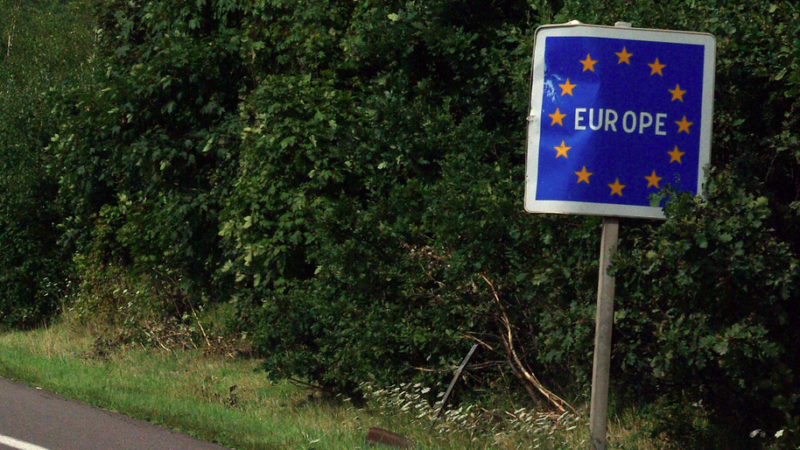
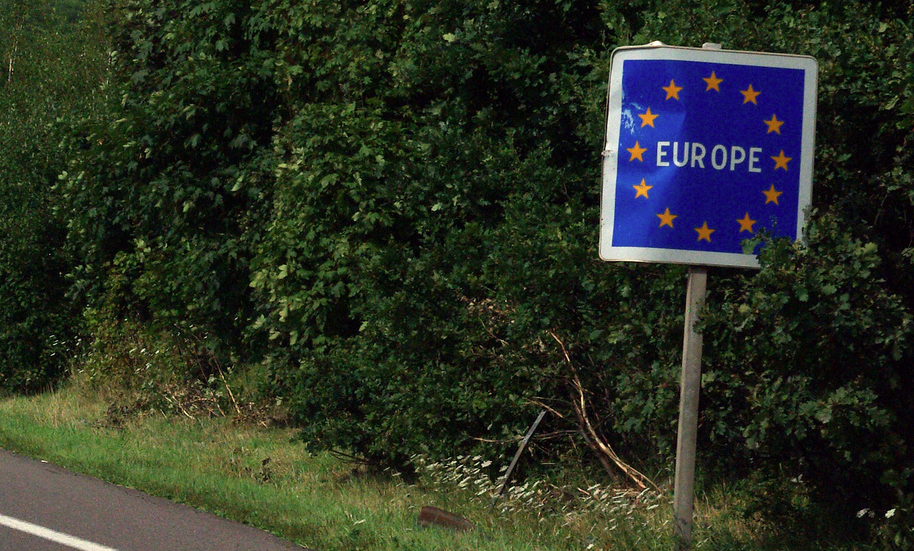
As regular readers of this blog know, the problems within the Schengen Area have been giving me cause for concern over the last few months. I have been wondering what best to do in light of my experiences, and my current plan is to find a way to more systematically document breaches of the Schengen Area rules.
But the problem is then: what are the rules? And where does EU law end and national law begin?
Here is where I need readers’ help before I can work out how to document breaches.
The essential issue is that, if asked, a policeman asking to see a passport or ID at a border should say that they are not conducting a border control, but they are performing an identity check on the territory of a Member State. So what then is a permissible identity check? This is important because a police officer may exceed what he/she is allowed to do under national law.
We know what identity documents are permissible in each Member State – that is laid out in detail in the PRADO database here. What we do not have a list of is what a police officer can demand of a citizen, and under what circumstances.
So ask yourself this question: if you are on the street in the centre of the capital city of one of the 26 Schengen Area Member States, and you are stopped by a police officer and asked to prove your identity, what do you have to show? Please comment below explaining the situations you are aware of.
So far I am aware of the following:
Denmark has no national ID card system, so if a police officer asks me to prove my identity on the street in Copenhagen I have to only give my name, date of birth, and address. I do not have to show ID. From this data a police officer could determine my CPR number if I am resident in Denmark, and from that has access to a whole lot more information. If I am a non-resident EU citizen I could be asked to present myself with ID at a police station within a certain period of time. (see more here, inc. comments)
Netherlands has a compulsory national ID card system, and this applies to EU nationals in Netherlands. If a “valid reason” is given by a police officer this ID has to be shown – this of course would prevent IDs being demanded from every person in a bus or a train, unless one is in a security risk area (such as Schipol Airport) where ID can be demanded.
Greece has a compulsory ID card system, so if ID is demanded by a police officer then it has to be shown. This applies to EU nationals as well as Greek nationals.
Hi everybody. I have plan to travel from Italy to Switzerland with my boyfriend. my boyfriend has permanent permission card to work in Italy but mine is student visa which is able to renew every year. Unfortunately at the time of my traveling , My visa will be expired but I have certification of renew my visa. My question is that: since we decide to travel by car , is there any stress or problem for me to enter Switzerland , ( I will bring my passport, my expired visa and post paper for renew my visa). thank all for recommendations
I have a small question also which gets close to this subject.
I have a FRENCH company that doesn’t accept a copy of my passport which includes a watermark (watermark mentions that this copy loses his validation when it is used for any other reason than the ID check for this certin company.
I know that it is forbidden by DUTCH law to ask for a full copy (without watermark) but how about other countries?
Can they deny my “watermarked copy of my (valid) passport” as a valid ID?
In The Netherlands you always MUST travel with a ID card, this can be a valid passport, a ID card OR a valid drivence licence.
So you need to be able to check your identity, if they cannot, you will be brought to the police station untill your identity is proven.
When it comes to the exact law, it is even forbidden to “hand over” your Identity card, only SHOWING it so the identity can be established should be enough (but most of the times it doesn’t come so far and if you’re going to make it difficult for the policeman I don’t need to explain that this officer most likely will start to make it difficult for you also…but however…it’s the law:)
For companies however this is different. Many companies love to make a copy of your passport/ identity card (like passport) which is forbidden by Dutch law!
Only the goverment, an Health Insurance company and a few other people can ask/demand for a copy of your passport and in this case it’s Dutch law that you can provide them a copy with a watermark/date and the notification on it where it’s mend for.
In this particular case you can remove your citizens number and other personal details to prevent Identity fraud.
The Goverment has created even a special App for it, called KopieID which allows you to make a picture with your mobile and which puts a watermark on it so the copy cannot be used for something else.
I hope this was helpfull…
I traveled from Greece to Bulgaria some months ago. Police officers stopped us while trying to park, first they said we should not park at the point we were because we cause traffic problem and we had to pay fine (we had not even parked yet) then asked for id documents and my boyfriend gave his but i had forgotten my wallet+ id to the hotel which was 10 km away from the point we were. After that they said we had to pay a fine of 150 euro for not having my id with me… and go to the police station. i told them i can bring it in 15 minutes but they did not accept it. To cut a long story short after they realized that we hadn’t that much money with us they asked us to pay them 50 leva (25euro) and ”its ok”. Then they told us to make an illegal 180 turn and park opposite and they left!!!!!! can anyone tell me if they had the right to make us pay fine for forgetting id in the hotel? and generally i want comments for that behavior of the officers please!!!!!
A remark about the Dutch ID system: you can’t be asked to produce an ID without cause.
On the street, only certain officials may ask to see proof of identity. Those officials are:
– police officers
– ticket inspectors on public transport
– special enforcement officers (BOAs) like labour inspectors and forest wardens.
These officials may not ask to see proof of identity without giving a reason. Situations in which they may do so include:
– traffic management (for instance, if a cyclist rides through a red light);
– the maintenance of public order (when people’s safety is at stake);
– the investigation of criminal offences.
If you are unable or unwilling to identify yourself in such situations, you will be liable to prosecution. You risk being taken to a police station, where your identity will be investigated. You may also have to pay a fine. (From http://www.government.nl/issues/identification-documents )
A real-life example:
Suppose you traveling on an Amsterdam tram without a valid ticket. If you pay the fine on the spot in cash, you do not have to produce any ID at all. If you are not able or not willing to pay the fine on the spot, you are obliged to identify yourself.
Concerning the nature of border controls, it mainly depends on the kind of border we are speaking about:
AIRPORTS: Since the adoption of the Schengen agreement, airport terminals have been split between Schengen- and non-Schengen areas as in most Schengen states.
TRAIN: Trains to France from Basel and Geneva still depart from physically separated platforms which require to pass through a custom office, even if personal identity checks are rather uncommon. On trains from/to Italy, the pre-Schengen control standards of on-board controls are more or less kept. The major change is of technical nature: since the introduction of a new rolling stock, a time-consuming change of the locomotive is not necessary any more, meaning that border checks take place while the train is moving between two stations (Brig-Domodossola and Lugano-Como). The major change concerns the German station of Basel, where the platforms used to be segregated from the rest of the city by border checkpoints, which have now been removed. On-board controls by the Swiss or German police between Basel and Freiburg have become common since then.
ROAD: There is a myriad of small border crossings between Switzerland and Italy, France and Germany. Most of them are not controlled at all any more, but the checkpoints on motorway were not removed, due to the fact that they are still used for the customs control (Switzerland is not in the EU customs union and for the sale of Swiss motorway passes). It needs to be stressed that the most important border crossings between Switzerland and its neighbouring countries are located in large cross-border metropolitan areas (Geneva, Basel and Lugano/Como) making occasional “flying controls” very difficult outside the border facilities.
In Switzerland it is not compulsory to own or carry an identification document. Nonetheless, the police is allowed to check one’s identity in case of – even vague – suspect of law infringement. Without a valid identification document (identity card or passport), the usual procedure is that the suspect is carried to the police station for identification, a procedure that can last several hours.
Moreover, an identification through an official document is requested by countless public and private entities, meaning that the vast majority of people carry the identity card all time. Moreover, it has to be stressed that the second- and third-largest cities (Geneva and Basel) are within the 20 km Schengen line, meaning that there could be an additional reason for a motivated identity check.
In Switzerland, systematic identity checks at the border were already uncommon long before the implementation of the Schengen agreement, which de facto caused very little perceivable changes at land borders.
Sorry! A link that answers some of your questions from the point of view of the Danish citizen in Schengen:
http://www.eu-oplysningen.dk/dokumenter/ft/paragraf_20/alle/20002336/ (in Danish)
Obviously when we talk about the law or custom, we should bring up the relevant legislation (which I was in too much of a hurry to do last evening) or court citations of customary practice. I will also address your statement about the French ID situation which you linked to above. I apologize for drawing out this comment thread, but could not find a way to edit/update my previous input with the new info.
Your point is: Either have regular border controls or don’t claim that Schengen has abolished them.
As to some party (the Members States, politicians, law, administrative circulaires, etc.) claiming that Schengen has abolished border controls, are you referring to a legal instrument, a parliamentary/committee pre-legislative document or to the mass media? Which document? If it is the mass media or common perception that you are referring to then we have a logical problem here, since neither of these carry any legal weight. What they media say or what the average bloke on the street thinks Schengen is, doesn’t count legally.
If I recall correctly, you teach EU law or research it. So you are highly likely a legal graduate and know all about how we weigh legal sources (both common law and civil law). As you know, we look to pre-legislative work to answer the question “What were they thinking?”. We look to the actual instruments then to answer the question “What can they or can they not do?” We look to court cases to find out “What have they done and could they actually do it?”. I cannot find any definitive legal statement that borders controls have been completely abolished (that is, Member States are not allowed to conduct them or to conduct random checks that people are holding travel documents).
The French link you referred to clearly states under the rubrice regarding the Schengen context that:
Ce contrôle permet de vérifier le respect des obligations liées aux titres et documents
… in other words exactly what I stated in point 1. They are checking that you have the needed documents to cross borders (or that you do not intend to cross a border without proper documents). Further there is another link on this page entitled:
De quel titre d’identité a t-on besoin pour voyager ?
If you are a French citizen crossing Schengen borders:
Vous pouvez vous rendre dans un pays de l’Union européenne, avec une carte nationale d’identité ou un passeport en cours de validité.
Notice in the last section about traveling domestically in France:
Même si la possession d’une carte nationale d’identité n’est pas obligatoire, vous pouvez faire l’objet de contrôles d’identité à l’intérieur du territoire français.
Since you are not crossing a border in this case, they could in practice let you go with showing a local driver’s license or some other local ID.
NB: This informational material does not carry the weight of the relevant legislation itself.
Regarding Denmark:
With reference to Padborg, you will find the relevant Danish border crossing legislation for the most part in Udlaendigeloven Chapter 7:
Stk. 2. Ind- og udrejsekontrol må ikke finde sted ved grænsen til et Schengenland. Dog kan der undtagelsesvis ske kontrol ved en sådan grænse i medfør af Schengengrænsekodeksens artikel 23.
…
Stk. 6. Politiet kan standse et **køretøj inde i landet** med henblik på at kontrollere, om køretøjet transporterer en eller flere udlændinge, der er indrejst ulovligt i landet.
…
§ 39. En udlænding skal ved **indrejse**, **under ophold** her i landet og **ved udrejse herfra** være i besiddelse af pas eller **andet dokument, der efter justitsministerens bestemmelse kan godkendes som rejselegitimation**.
…
Stk. 3.
… Ved indrejse fra eller udrejse til et Schengenland skal passet eller rejselegitimationen ikke forevises for paskontrollen, medmindre der undtagelsesvis sker kontrol ved en sådan grænse i medfør af Schengengrænsekodeksens artikel 23, jf. § 38, stk. 2.
I’ll stop here so as not to draw out the discussion on this topic.
The legal CONTEXT is important here, so as not to confuse the question of “When can one be asked for identity documents in (fill in the name of the country)?” and “Under which circumstances, where and how can I cross the border to (fill in the name of the country)?”. That is the point here. The context is a BORDER CROSSING (not being stopped on the street in the country). I understand that you are seeking to create a legal context of “already inside of the member state” in order to challenge the current practices and refer the matter to the FIRST question.
But in fact, the authorities and legislators have intended it to be a matter of the SECOND question.
For instance, Finland and Estonia have (as does Denmark) laws about the national border, including how varying classes of nationals and non-nationals may cross it, where they may cross it and what they must be in possession of in order to cross it. Failure to meet the criteria for the group one belongs to is considered a crime in Finland, Estonia and other countries and can result in hefty fines and up to one year imprisonment. Granted, both countries have provisions on the de facto admission of their own citizens even without the required documents in exceptional cases. This could technically be considered “discriminatory” toward other EU nationals, but I understand that the issue here is the primacy of the state of citizenship having under all circumstances the obligation to re-admit its own citizens (which is even stronger than the Schengen agreement restrictions on impediments to free movement).
It would appear that MANY EU citizens share your views (particularly those who make last-minute travel plans or haven’t noticed that their passports or ID cards have expired and want to be on that cruise to the Baltic countries, for instance). However, in actuality what you (and they) are asking for is a PASSPORT UNION ála the Nordic Passport Union and not the current Schengen system with fast-track border crossing where travel documents are still required to be on hand in order to legally cross Schengen internal borders. This is actually a citizen rallying question in order to change the current agreement.
Sorry Gunnar, but as you say yourself in your first post, there are very few circumstances when any official can actually demand the travel document at the border itself, so while your point about Schengen not technically being a passport union is correct, Schengen nevertheless means that carrying out controls at borders should not happen. So yes, when travelling, you need to take a passport or ID card, but the circumstances where it need be shown are very narrowly defined.
This then leads to the situation at the Germany – Denmark border (one I cross often), but also a situation I have experienced elsewhere, where instead of checking at the border, and this control be done by border police, instead the check happens a little further into the country, and is done by regular police. I ask these police each time whether the check they are performing is a border control or an identity check, and they tell me the latter.
So I am not making some sort of rallying call for a change to Schengen, indeed far from it. If we are to be controlled at borders, do it, and make it a border control. Do not maintain the notion that borders have been eliminated, and then perform ID checks close to the border that have the same purpose as border controls. And I am not, and indeed citizens are not, the ones trying to make such a climate – the Member States have done that themselves.
I have filed (for a friend) a “question” with the Commission regarding Estonian random ID/Passport checks at the Port of Tallinn as I thought along the same lines for quite some time.
Here is a “crash course” in what Schengen is and what it is NOT.
Schengen simply implies that:
1) You can keep your national id (with info on nationality) or your passport (EU and non-EU) in your pocket MOST OF THE TIME (sort of like filing your tax return online without sending any supporting documentation) but you must still be in possession of a document allowing you to cross borders (Schengen or otherwise),
2) If someone with the authority to ask you what your status is in a Schengen country asks you to exhibit some document to prove it, then you need to do so within a reasonable amount of time or allow them to check out your story through other policing means (national DB check with a driving license or Name/DOB/Address, for instance)
3) When you are outside of your country of residence (where a driver’s license or a sundhedskort might well work as a form of ID), a TRAVEL DOCUMENT is the only internationally recognized identity document
4) If you honestly forgot your ACCEPTABLE NATIONAL ID (passport or national ID with citizenship info), the authorities must allow you to prove your status in some other way within a reasonable amount of time, during which they MAY NOT REFUSE YOU ENTRY
5) You may be fined for crossing borders (Schengen and Non-Schengen) without a document allowing you to do so (A TRAVEL DOCUMENT) and
6) You CANNOT travel or live in another Schengen country (even one where there is no obligatory ID-carrying policy, i.e. Denmark) without a local form of identity or an international form of identity (your EU passport or EU identity card with citizenship info)
Schengen is NOT:
A passport union (i.e. the Nordic Passport Union which abolishes the need to carry TRAVEL DOCUMENTS for certain citizens traveling WITHIN THE PASSPORT UNION AREA)
Since border checks are not carried out as they are for instance between Schengen and the UK, you save some time and hassle when travelling or are checked in an EXPEDITED fashion in order to police whether you are carrying the TRAVEL DOCUMENTS you should be carrying in order to cross borders.
Gunnar – thanks. But that is not altogether correct. Take the French case for example – see the rules on identity in France here. That is much wider than your point 3. Yes, your travel document is the only guaranteed recognised identification, but the national rules vary. Also point 2) is not as clear as you state it, because there is the additional question of under what circumstances in any of the Schengen countries any citizen (whether a resident or a visitor) can be asked for ID.
@Nikos / Manuel – thanks for your replies!
@Justin – no, there is no danger of that. See the Danish example – being in Schengen has not obliged people on Danish territory to have to carry ID all the time.
Though not a member of Schengen, I was under the impression that in the UK the police can’t demand ID, unless they are arresting you, or if they are investigating your motor vehicle (as you are required to have a drivers’ licence), or if you are in a defined anti-terrorist area (such as Heathrow Airport).
It would be ironic on a liberal politics level if by joining Schengen, the right of the individual NOT to be required to carry ID is lost.
I mentioned in my last comment that there is probably a nice legal explanation to my puzzle how the provisions in the German §8 FreizügG/EU are reconcilable with Schengen. By now, I’ve realised that the answer is easier than I had thought: All EU citizens are obliged to carry a passport or ID card when entering German territory and to present it “if required” by the police. However, the police can only require this presentation of the ID card if you are entering from a non-Schengen country (which is only possible by plane, as all immediate neighbours of Germany are Schengen members) or if they have some other motive to realise an ID check near the border (e.g. fighting cross-border crime).
This implies, of course, that it will be almost impossible for an individual to say whether a police officer who is asking for your ID card at the Danish-German border really has a right to do so. It all depends on whether it is only an “occasional” ID check (which is allowed) or whether it’s a “regular” border control (which is forbidden under the Schengen regulation).
Hi Jon,
sorry for that delay, in Greece is exactly as in Spain. Compulsory ID or passport for anyone. Driving licence officially is not enough. I was held in a police station once (though 15 years ago) as I had my driving licence but not the ID with me in a street control until they verify my details…
Hi, the German legal framework for ID checks is rather complicated and I am not a specialist. However, here are some things that might be interesting:
– According to §1 PAuswG (ID Card Law), adult Germans are obliged to possess an ID card (http://www.gesetze-im-internet.de/pauswg/__1.html). However, they are not obliged to carry it with them (though most people do).
– According to §8 FreizügG/EU (Law on the Free Movement of EU Citizens), citizens from other EU countries have to carry a passport (or an “accepted passport substitution”) with them when entering the country and they have to present it to the “competent officer”, “when required”. Once they have entered the country, however, they are only obliged to “possess” this passport during their stay, not to carry it with them (http://www.gesetze-im-internet.de/freiz_gg_eu_2004/__8.html). In any case, I’m not quite sure how this distinction between entering the country and staying in it is reconcilable with Schengen requirements, but I suppose there are some nice legal explanations for this somewhere…
– The police law provides for a number of situations in which police officers are allowed to realise ID checks. However, as the police is part of the regional (Länder) competence, these provisions are quite varying. Generally, if your identity can’t be checked in such a situation, the police can (a) search you and (b) arrest you until your identity is clear (max. until the end of the next day). (I’m not sure whether there has to be a concrete suspicion that you’re not giving your real name or whether it is enough that you are not carrying your ID card/passport with you and thus can’t prove it.)
– If we believe Wikipedia (http://de.wikipedia.org/wiki/Identit%C3%A4tsfeststellung_%28Recht%29#Identit.C3.A4tsfeststellung_zur_Gefahrenabwehr, I didn’t check this myself), there is a provision in all regional police laws that such ID checks can be carried out on highways, in cross-border trains and generally within 30km from international borders, in order to prevent illegal border crossings. Here again, I don’t know how this fits Schengen requirements, but as I mentioned before, there sure is some nice legal scholarship on this and I’m not a specialist in it…
Hi, jumping on the Slovenian case.
Yes, you have to show it. Everyone walking on the streets in Slovenia needs to carry an identification document. No justification needed.
What I don’t know is what happens, if you don’t have one on you.
@Natalie – thank you. I’ve heard of that case before. Sadly the same sort of things still happen, at least it seems so.
@Catherine – yes, but I think that will not have much bearing on this work, as that package concerns the external borders (or did I misunderstand something?)
Jon, I suppose your know the EC is presenting a “smart borders package”: “EU ‘Smart Borders’: enhancing mobility and security” on Wednesday 27 February, maybe it will help? http://europa.eu/rapid/press-release_AGENDA-13-6_en.htm
This disturbing piece from Germany comes to mind, re skin color and id checks.. truly awful http://m.thelocal.de/national/20120327-41589.html
What Bulgarian situation? Bulgaria is not a Schengen country.
@Galin – yes, and Romania too. While these cases are not central to this piece of work, there is no harm in trying to work out the answer to this for when those countries do join Schengen. And the specific question is more about national law and ID than specific Schengen rules anyway.
@Floris – super, thank you! As with most similar situations the Belgian Police does need a motivation.
For Belgium this is the relevant article (google translate does a fine job). The proof of identity is allowed through any official document, from a passport to a hunting license.
Art. 34. § 1. The police check the identity of any person whose freedom is deprived or who have committed an offense.
They can also check the identity of any person if, by reason of his behavior, physical evidence or circumstances of time or place have reasonable grounds to believe that he is detected, he attempted, or preparing to commit a crime or that he might disturb public order or has disrupted.
§ 2. Accordance with the guidelines and under the responsibility of an administrative police officer may (the police) also check the identity of every person who wants to enter a place that is the subject of a threat within the meaning of Article 28 § 1, 3 ° and 4 °.
§ 3. In order to maintain public safety or to ensure compliance with the legal provisions relating to the access to the territory, residence, establishment and expulsion of aliens, the governments of administrative police, within the limits of their powers, identity checks prescribe, to be conducted by the police in circumstances such authorities determine.
§ 4. The identity documents handed over to the police officer may only be withheld during the verification of the identity necessary time and must then immediately returned to the person concerned.
If the person mentioned in previous sections refuses or is unable to provide proof of his identity, and if his identity is doubtful, he may be detained during the verification of identity needed time.
The possibility should be offered to him to prove his identity in any way.
In no case may the person concerned to that end more than twelve hours off.
More to the point, there has been a long-standing controversy concerning police checks performed by German police officers on Czech citizens on the roads in Saxony and Bavaria in the vicinity of the border (see eg http://euobserver.com/justice/116881). The Czechs have complained that cars with Czech licence plates were specifically targeted, often stopped by plain-clothed officers in unmarked cars, raising issues of the identification of the police themselves. There have been some discussions and complaints by the Czech government but the problem is these checks were performed by officers from the state, not federal police, over which the Berlin government does not have much of a say. Also, the news reporting of this has diminished in the last year or so, so maybe this practice has been restricted.
Bulgarian situation summed up in this Twitter discussion.
@Jan – interesting! When my campaign gets going shortly that will sure be reported – if it is still happening.
Jon – in Austria the situation is like this: As an Austrian citizen, you don’t have to carry ID. You only have to show ID if police have reason to believe you comitted an offence etc. As a non-Austrian citizen, you have to be able to prove your identity with “adequate documents” – this would usually mean a picture ID, i.e. passport, driver’s licence, ID card, etc.
The Czech Republic has a compulsory ID card system. If the police stop me in Prague and ask me to identify myself, they need a valid reason. The identification means I am obliged to state my name, date of birth, address. The easiest way to do this is to show the ID but I am not required to carry it on me so I can just provide the details verbally and they will check them in their database.
In dealing with the public authorities, the ID card and passport may be used as proof of identification, but not a driver’s licence.
@Javier – super, thank you! That’s one of the more restrictive ones.
@Phil – super, thank you. I’ll try this next time I’m checked at Brenner, as that was one of the places where I had the toughest checks, back in 2009!
I’ve also been directed towards the conclusions of the Melki case – PDF here.
In Spain the police can request your ID (mandatory) without any reason. They have the “right” to identify whoever they consider. ID or passport are valid. Not sure about drive license. For non nationals ID or passport is also ok. The law says you must carry the ID all the time…
@Eric – for the Belgian and Romanian cases does the police officer have to state a reason?
@Tim – yes, the French rules are complex, and there is also a ECJ case on this. There is the ongoing question of whether these rules contravene Article 21 of the Schengen Borders Code. Anyone want to test this by going back and forth between St Jean de Maurienne and Modane?
@Dragan – yes, but the question is what can a Slovene police officer demand? If he says ‘Oj, Dragan, rad bi videl vašo osebno izkaznico?’ do you have to show it? Or is a justification required?
@Jan – super, thank you – super clear explanation!
The police in the Netherlands took photographs of people’s passports at the border while a bus from Germany was being stopped – is this legal?
I would use my Slovenian ID card.. a credit card size which I carry in my wallet. I might replace this with my drivers licence – the new credit card size as prescribed by the EU.
In Slovenia we have to carry an ID on us but it can be one of the three: passport, ID card or a drivers licence.
John, who is a UK citizen, never carries a passport whilst in Slovenia but carries his drivers licence. He has never been stopped but I think that would suffice for the Slovenian policemen.
The French rules that you post above are interesting – they refer specifically to a “Schengen agreement check” that can only be considered as such if it is carried out within 20km of the border (with some exceptions e.g. on international trains checks can be carried out more than 20km from the border if the train hasn’t stopped before then, and for up to 50km after the first stop if there isn’t a second one within that distance, if you see what I mean) or at an international station, port, airport etc. I haven’t read the Schengen agreement but the below suggests that checks are explicitly provided for.
French language original:
Contrôle dans le cadre de la convention de Schengen
Ce contrôle permet de vérifier le respect des obligations liées aux titres et documents. Il peut être opéré dans les lieux suivants :
Zones situées à moins de 20 kilomètres des frontières des États signataires,
Portions et aires d’autoroutes jusqu’au 1er péage situé après la limite de 20 kilomètres,
Trains jusqu’au 1er arrêt situé après la limite de 20 kilomètres. Pour les trains internationaux, la zone de contrôle est étendue jusqu’à l’arrêt suivant, dans la limite de 50 kilomètres après le 1er arrêt.
Ports, aéroports, gares routières et ferroviaires ouverts au trafic international.
Belgium has a compulsory ID card system, so if an ID is demanded by a police officer then it needs to be shown, regardless the nationality of the person.
Romania, exactly the same.
Information on the French rules here.
@Maxence – that might not be a contradiction. It depends what you have to carry with you – if you don’t have a Dutch ID, I think you would be legally obliged to carry the ID of your home country with you instead.
Hi Jon,
You say : “Netherlands has a compulsory national ID card system, and this applies to EU nationals in Netherlands.”
I went to register in a Dutch town in November. I asked if I would have any kind of ID card from the Netherlands, they said no. You just have a BSN number (maybe close to the CPR in Denmark).
I’ll try to find out more soon.
Maxence