Why the Spitzenkandidat process is the best thing to happen to EU-level representative democracy for years
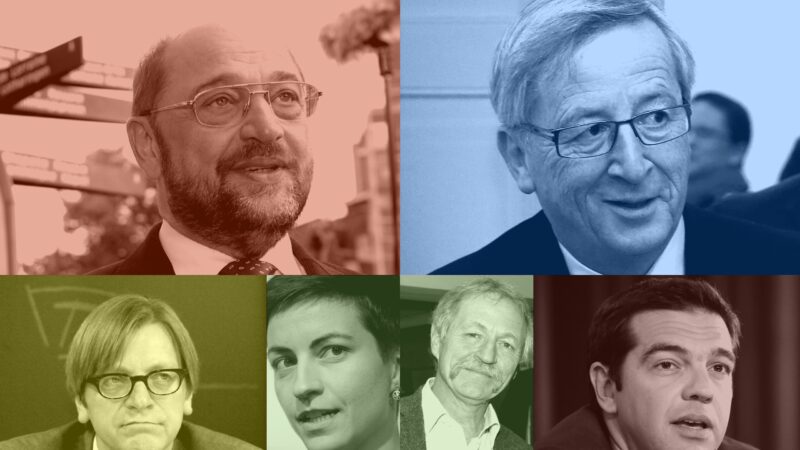
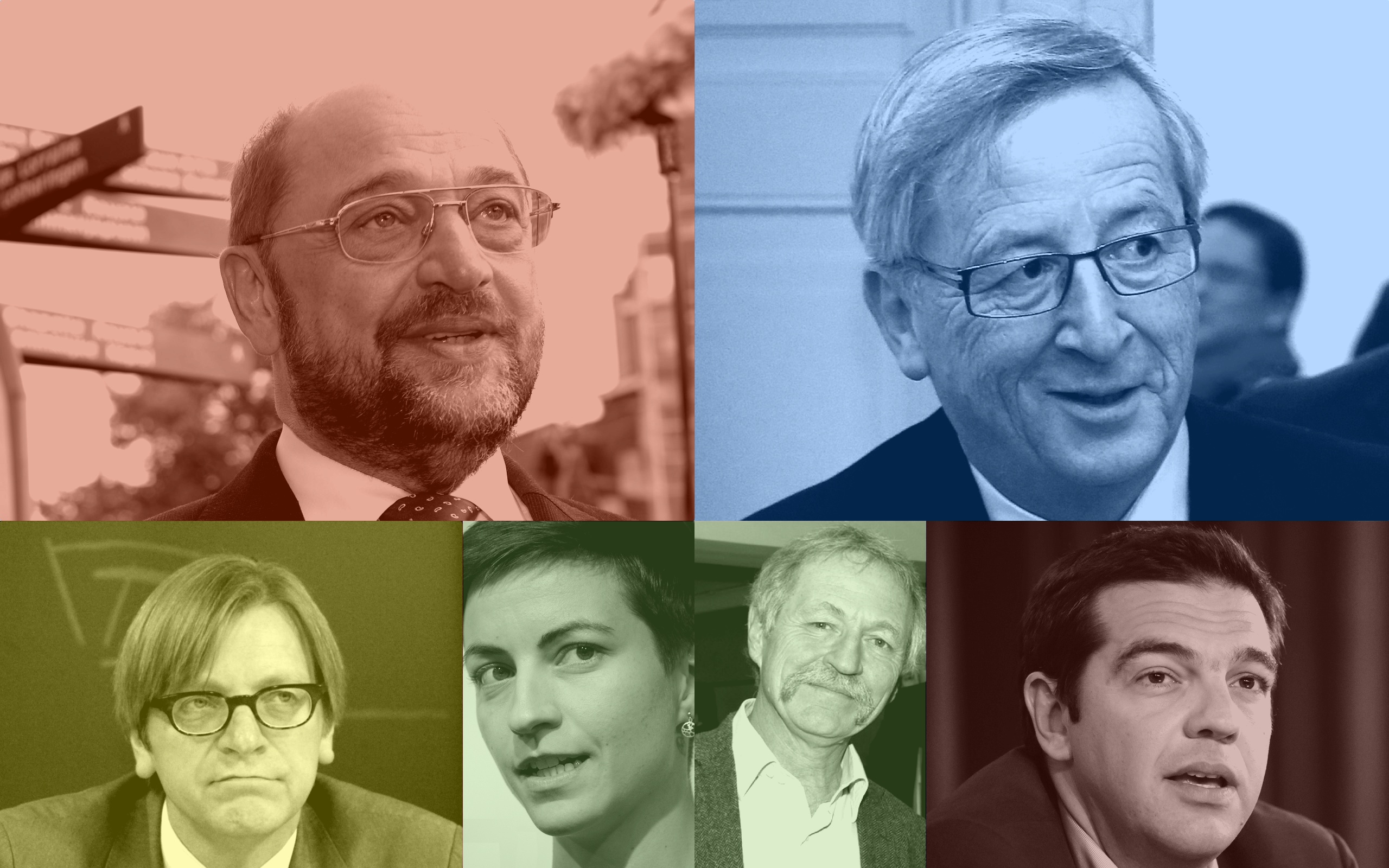 Let’s get the caveats out of the way first. I know the way the parties selected their Commission President candidates was imperfect. I know that none of the candidates has really shone. I know this process has not been dealt with with the same degree of seriousness right across the EU. I know that I am writing this before the European Parliament election and we do not know what is going to happen after the election and whether the political parties will stick with their candidates. And this whole thing may yet derail, and I’ll amend my views accordingly if it does.
But for now the Spitzenkandidat process is the best thing to happen to EU-level representative democracy for years. Here’s why.
For the first time there is a clear connection between the legislature (the European Parliament), and the executive (the European Commission). This makes the European elections more like elections for a national parliament, and more understandable to voters. Vote left, get a boss of the thing that’s from the left. Vote right and get a boss of the thing from the right. “But they can’t actually do much!” might come the reply. Well look at the Mayor of London for comparison – a position with little in the way of formal power, but plenty of scope to influence politics if filled by the right person. EU politics is not the only level of politics with a credibility gap.
Secondly, the parties and their candidates are actually mounting campaigns. Not perhaps at the level of national campaigns yet, but still EU-wide (Juncker’s been to 32 cities in 18 countries for example), and with press work and campaign vehicles (as far as Helsinki) and war rooms and speeches and some posters.
Thirdly, the press is taking some notice. The #tellEurope televised debate this evening will be shown all across Europe (albeit not always on the most mainstream channels), and is one of seven such debates, and 1.79 million Germans watched Schulz-Juncker last week. View this as few if you wish, but as Ralf Grahn points out, this is a hell of a lot more interest than there was in 2009!
Fourth, all the candidates and the parties have made a pretty good effort at integrating social media, and especially Twitter, into their campaigns. If you cannot reach the voters via the mainstream means, then do so online. This is a modern election campaign in that sense.
So you have a choice. Bemoan the process, Open Europe style, before it has had the chance to run its course. Or see it for what it is, and what it in the future could be a major step towards – a functioning EU-wide representative democracy. That’s something to be optimistic about.
[UPDATE 1400]
Transparency International has pointed me towards this Google Spreadsheet that lists all the journeys made by the candidates.
I agree with you. The spitzenkandidaten system is a welcome step, making matters more logic, transparent and exciting.
It is funny, because The Economist’s last issue (from last Friday) completely disagrees with us, thinks that national governments should not let the European Parliament get away with yet another power seizing (the right to nominate the head of the Commission) and calling for repatriation of powers (as if there were hundreds of them in Brussels). This magazine is becoming increasingly anti-EU by the day, probably reflecting the mood of British society.
The future does not look bright for those of us who still believe in Europe.
Hey Jon,
thanks for this post, completely agree with you: the process here is exciting, and the fact that the European parties are struggling to rise up to the challenge posed isn’t necessarily discouraging: we are after all in unchartered territory here!
The direction I would hope to see this going is to see at least some of the candidates proposing to actively seek more and more a connection between the EP Majority and other members of the commission, not least the foreign affairs post. An aggressive Commission president would certainly start by asserting a much more critical level of control over EC members and a connection with the parliamentary majority would be easy to organise in EP approval hearings.
Schulz brushed on the subject on the ZDF/ÖRF debate but it would be smart for him to push this.
Also, I know the idea seems outlandish compared to most continental systems, but the British concept that ministers must be MPs is perhaps one of the strongest instruments of Parliamentary sovereignty in the UK. The EP should definitely grasp this opportunity to assert itself and set a precedent.
The great unknown I think will come after the election. Are the political groups prepared for serious coalition negotiations? Is the relative winner of the upcoming election prepared to assume a temporary role of negotiator and try, in a limited time-frame, to agree to a coalition agreement with its coalition partners? Are the left and centre-left groupings mature enough to agree on a common political platform to form a majority? Or is the PES going to persist out of old habit and self-interest with its grand coalition mentality?
The European people deserve to decide the political ideology of the representatives they elect. A real coalition based on a politically cohesive programme of the left is for me the only way to change the balance of power in EU institutions, though I might admittedly be biased about this.
Schulz has a lot to answer to his co-candidates from the greens, left, and ALDE, and I certainly hope he will use tonight’s debate to make his case and open a certain dialogue before the election that may offer the electorate a sense of the different coalition possibilities.
I would also just like to doff my hat to ZDF and ÖRF for the debate they organised. After the sleepiness of the France 24 debate and the rehearsed tone of the Euronews one, finally we got the candidates to go deep in content, answer to serious questions in depth and on the spot!
Language did it probably. The other debates so far have been soporific with Juncker’s English or Schulz’ French…
I wish there was a way to get a debate where each candidate gets to speak their own language, and maybe it will come one day.
Anyway thanks Jon for all the work on the debates, and I think it’s safe to say most of us will be watching tonight.
To add:
a. To all your initial disclaimers: The outcome of this election is much less important than the precedence it sets for the appointment of EC president in future elections: If the winner actually becomes president everyone will take the nomination process a lot more seriously next time – including the press! And it will be much more interesting for voters to follow the campaign without all the discussions about process instead of content.
b. “EC president does not have much power”. He can propose whatever law he wants and promote whatever agenda he wants. He can dismiss cabinet members. With the legimacy of the majority of EU voters behind him he has all the power of a president in any bicameral system. Am I wrong?
c. ” Not perhaps at the level of national campaigns yet”. Take a look at France. The socialists and centrists have asked Guy and Martin to represent them at the final debate among party leaders before the election (http://www.20minutes.fr/societe/1370597-20140508-debat-france-2-europeennes-cambadelis-bayrou-veulent-ceder-place). Tsipras has become a key part of the Italian EP election (http://www.wsws.org/en/articles/2014/05/15/ital-m15.html). In the Southern countries the spitzencandidaten play a real role.
Most importantly: For the first time we get an elected candidate who is forced to represent citizens of more than one country. Who is forced to present ideas and visions which resonate across Europe.