Vacuum cleaners in the EU: when technocratic decisions overshadow politics
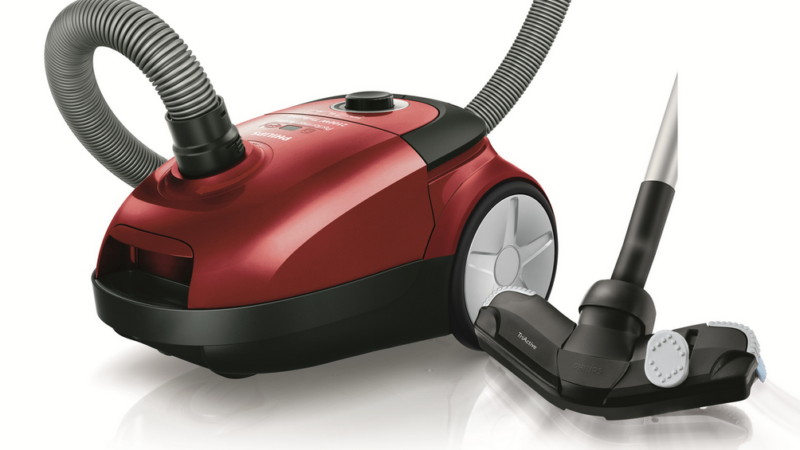
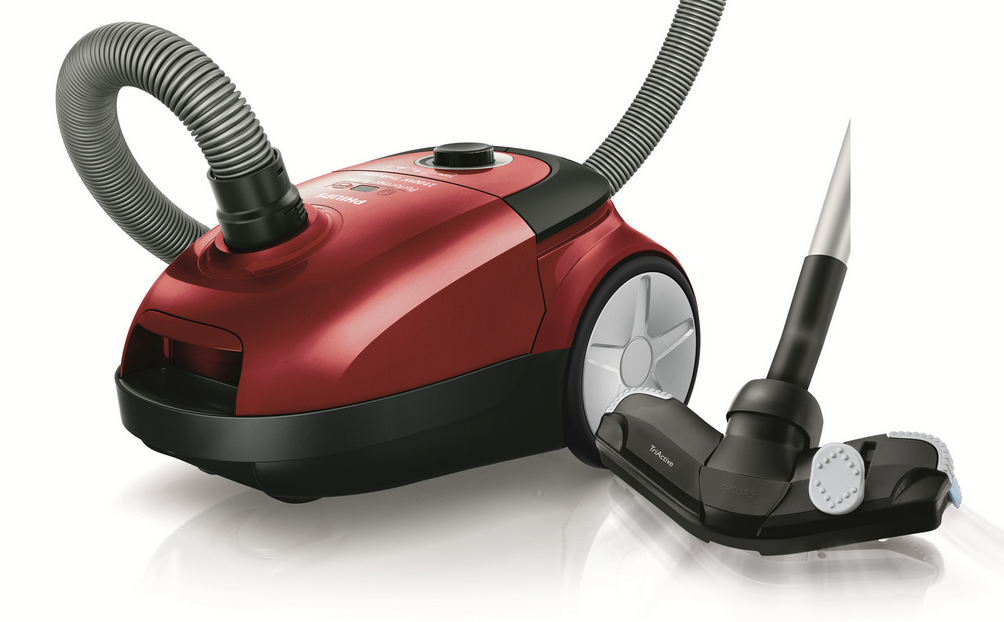 I saw this tweet earlier today from UKIP MEP Derek Clark, complaining that now the “EU is coming for our vacuum cleaners”. His tweet links to this story from the Nottingham Post.
So then, with “is this UKIP bullshit” warning system activated in my mind, I set out to find what is going on, and indeed the EU is indeed sorting out vacuum cleaners. But here, just like anything else when it comes to EU law, the picture is a lot more complicated that one UKIP MEP sounding off. Or, if you Google a bit deeper, Tory MEP Giles Chichester rambling on about the same thing a few months ago in The Telegraph as well.
First it is worth setting one thing clear: there is a mass of EU law that impacts vacuum cleaners already. Things like WEEE and how you recycle it, what plastics are safe to put in the casing, what information has to be displayed on the box, and what your rights are if it proves to be defective. So this is not the EU suddenly regulating vacuum cleaners – there has been EU law on this for ages.
Then to the matter in hand, and the topic of the recent Nottingham Post piece that Clark cites. The maximum motor wattage of vacuum cleaners will be set at 1,600W from September 2014, and will then fall further to 900W in 2017, and that will indeed happen.
This triggers two further questions: is this right? And was the decision taken correctly?
The main piece of legislation in this area is Directive 2009/125/EC of 21 October 2009 establishing a framework for the setting of ecodesign requirements for energy-related products (PDF here). This legislation was decided using the ordinary legislative procedure, meaning the European Parliament had equal legal powers with the Council to decide it. The timing of this is a little odd though – the legislation was finalise just after the 2009 European Parliament elections, meaning the main work was prior to the elections in the last parliamentary term. Clark has been a MEP since 2004 though, so he would have been privy to these discussions, and had a vote on the legislation.
This legislation then gives the Commission the power to apply the ecodesign principles to all kinds of good – a list of these is here. It covers things such as Complex Set-Top Boxes, Industrial fans and Water pumps. And vacuum cleaners. The legislation for vacuum cleaners is Commission Regulation (EU) No 666/2013 of 8 July 2013 implementing Directive 2009/125/EC of the European Parliament and of the Council with regard to ecodesign requirements for vacuum cleaners.
The important thing to note here is that this legislation just about vacuum cleaners is not subject to the ordinary legislative procedure. It is the Commission acting alone. However a glance at Article 15 of 2009/125/EC shows how the Parliament granted the Commission powers to take forward the implementation of the principles. Now you might argue that the powers granted to the Commission were too wide, and that the European Parliament should also be involved in setting the maximum power of a vacuum cleaner, but a decision was taken – legitimately in 2009 – to not do that.
Further, the way the Commission takes this decision looks technocratic, but it is an intensely political thing in the end, because it has implications for consumer rights and consumer behaviour, and for energy policies and energy efficiency. In Europe should we all use cheap, poorly designed vacuum cleaners that nevertheless have 2200W motors that use a lot of energy? And in the end generate more electricity? Or, through EU law, should the companies that make such products be forced to innovate and make products with better design but that use less energy? Dyson’s DC50 already has a motor rated at just 700W (thanks Ken Page on Twitter for the tip), and James Dyson is even quoted at the very bottom of the Telegraph’s piece saying “Bigger motors don’t equal better performance. In fact they symbolise outmoded ineffective design”.
Now who might know more about the functioning of a vacuum cleaner – James Dyson or Giles Chichester or Derek Clark? I’ll leave you to decide that. But on this, just like so many EU scare stories in the UK press, the issue is a lot more complicated than meets the eye. For what it’s worth, I am very happy the Commission is doing this – energy efficiency is good, it needs law to make it happen, so initiatives like this are excellent.
The 1600watt limit I didn’t mind too much – plenty of good vacuum cleaners at the 1200 – 1600w range. Indeed some of the 2000+ watt cleaners have very poor ratings by Which? Magazine.
But 900w is definitely on the low side and will mean under powered machines.
Dyson have already split their range. Outside Europe their latest is a DC65 – 1300w and 265 air watts.
In the UK their latest equivalent is a Dyson DC41 Mark 2. 700w and only 110 air watts of suck.
Efficiency only goes so far without a major technological break through – and genuine breakthroughs – rather than evolutionary improvements are often rare.
I suspect Europe will end up with lot of sub standard equipment while the rest of the world enjoys the luxury of high performance goods.
Personally I’d have preferred an “efficiency tax” on less efficient goods. If a manufacturer can show that their 2000w item can do the job more efficiently than a 900w item then no penalty.
The EU are working their way through the household and will be banning further items. Kettles, hairdryers, air conditioning, toasters, in fact pretty much everything will be forced to be low powered.
Low powered won’t necessarily mean more efficient – in the same way high powered is not always better. In fact a 100watt kettle that takes a day to boil is less efficient due to heat wastage than a 3kw kettle that boils in a minute. So low powered may actually result in more energy waste.
Good digging Jon tho if I remember correctly this anecdote first emerged in consumer mag Which? in the UK and therefore was not originally a UKIP scare story. The fact Which? warned these vacuum cleaners are now off the market says it all really – the decision was taken in brussels, and the intricacies of how and why that decision was taken matter little to your man on the street, or politicians for that matter. Bit of an own goal by the EC if you ask me. Congrats on your blog, Justin
The whole thing is pretty silly and is yet another manifestation of incompetency. If energy consumption is the desired thing why not increasing the sales tax on electricity? If you want to decrease overall fuel consumption/combustion emissions, don’t require engines to fulfill some limits – just tax the fuel (or the engine, if you must) and put the money into R&D grants for cleaner energy sources/sinks. This kind of micromanagement (which it really is) creates more problems than it solves. Forbid light-bulbs and use fluorescent lamps which contain mercury. Use “bio” fuel and clog the engines’ fuel injection and raise staple food prices in the third world countries. Won’t the bureaucrats ever learn that they really don;t know best?
James Dyson has already shown that the application of innovative design can greatly reduce the power consumption of appliances. EU legislation or not I think the appliance manufacturers ought to be investing more in R&D to develop more energy efficient motors instead of endlessly tweaking the ergonomic design and colour schemes of their appliances.
The simple act is just to show how energy efficient each unit is just like a Fridge then the people have a choice. One glove policies don’t work, you couldn’t expect people who drive long distances in cars to have the same small engines in say Australia as we do in the UK where we have high revving small engine cars they have large slow revving cars which take the strain of constant air-conditioning use. It is the EU interfering in competences that it shouldn’t, we should be able to make informed choices based on information shown on the packaging & that is where regulation should be directed. Will there be an exception for cleaning companies that put their hoovers through the wringer?
@Martin Minimum pricing in Scotland is different in two ways:
a) The arguments around minimum pricing relate to public health, whereas the vacuum cleaner power consumption debate is about the environment. You may argue that one of these things is no more important than the other in law – I’m not sure if that’s true, but it’s still a difference.
b) Minimum pricing doesn’t prevent any particular product from being sold – it just affects the price at which it can be sold. To me, that is a fundamental difference, which means I am far more relaxed about it (assuming the minimum price is proportionate and not 1 billion euro per litre).
What about back to the original point about subsidiarity? Should a minimum price on alcohol be legislated on at European level? Perhaps not (even if it could be done in a way that takes into account differences in PPP), since different member states (and subnational entities within those member states) have substantially different relationships with alcohol and thus material differences in the impact of alcohol on public health. Do different member states have substantially different needs when it comes to their vacuum cleaners (or indeed other household appliances/consumer electronics devices), such that it is worth giving up the benefits of a single regulatory space to allow each member state to regulate according to their own pet likes and dislikes? I would say emphatically no. And again, I wonder what you think the single market should be about if it’s not about stuff like having a single rulebook for vacuum cleaners. Is the single market something that should only benefit B2B commerce in your view, lest it upset any of the traditions and customs of ordinary consumers?
With phones, there is also the question of connecting them to a network. Without common CE certification, it may be that it would be illegal for a Slovenian resident to use their Croatia-bought smartphone back home. It may even be illegal to take that phone onto the Slovenian territory. (If you think I’m joking, you should check the customs rules of some other third countries regarding the importation of mobile phones, even for personal use on a tourist trip.)
Am I right in thinking that you would support EU legislation to standardize electrical plugs throughout the single market?
And, on the last point, I get this. I was making the point, as I will try to do once more, that the Swedish government – even if it agrees with your viewpoint that vacuum cleaner maximum wattages should really be decided at the member state level – may decide to go along with a Commission proposal to regulate at the single market level (assuming this is deemed competent and legal) because this is a more effective way of getting the large-scale reductions in energy consumption that it seeks. That is, it may decide to put policy outcomes above constitutional principles – assuming, and I emphasize this again, that both options are deemed legal.
How is this vacuum cleaner law different from the Scottish rule on minimum prices for alcohol? No one disputes that that law was within the competence of the Scottish parliament. The only argument was whether that interfered unlawfully with the UK internal market as created by the Act of Union and/or the European internal market, and the Court of Session held that it did not: http://www.scotcourts.gov.uk/opinions/2013CSOH70.html.
So yes, this stuff does get delegated to sub-national entities from time to time.
Since you brought up the EU’s environment competences, look at what it says in art. 193 TFEU:
“The protective measures adopted pursuant to Article 192 shall not prevent any Member State from maintaining or introducing more stringent protective measures. Such measures must be compatible with the Treaties. They shall be notified to the Commission.”
Which a) contemplates a degree of heterogeneity and b) contemplates that such heterogeneity is not always incompatible with internal market law.
As for your smart phones example, I’m fairly relaxed about the CE story. My judgement in a particular case would turn on whether an actual non-negligible effect on trade had been shown. If the difference in standards is small, so that companies can make the adjustment at little cost, I wouldn’t imagine that to be the case. If that causes smart phones to be more expensive in Slovenia than in Croatia, Slovenians can always go and buy their smart phones abroad. That is also single market.
(It is also the little brother of foot voting by moving. In the Netherlands the petrol prices are significantly lower the closer you get to the German border. Loads of people buy their fireworks in Belgium and great numbers of foreigners buy their weed in the Netherlands. In the UK, all of this is much more difficult, giving the UK government much greater freedom to adopt ill-advised laws, a freedom that would only be increased if they left the EU.)
But back to the appropriate criterion. I mentioned the dormant commerce clause before. The US Surpeme Court has stated the criterion for cases that are not directly discriminatory as follows:
@Martin My point was that the environment is a shared competence *in addition to* the internal market.
Legislation on vacuum cleaner energy efficiency can arguably be made under the internal market competence without any reference to the powers which the Union has in the environment arena. I was just making the point that it is not unreasonable, given the Union’s environment competence, for it to be making policies like this which some may argue are not strictly required for, or go outside of, the single market remit.
I for one would like there to be a true single market in vacuum cleaners (and I would change the electrical plugs used in Cyprus, Ireland, Malta and the UK so that manufacturers can ship a single box to that entire market). I understand that you would like there to be 31 separate markets where I advocate one and you are entitled to that point of view.
I wonder what your thoughts are on smartphones though. Do you think it is a good thing that Apple or Samsung or whoever can target the entire internal market with a single CE certification, or would you be perfectly relaxed with Austria and Slovakia, say, having stricter requirements on the power output of mobile devices, such that the iPhone couldn’t be sold in those member states? If so, I wonder what exactly you think the point of the single market is.
I’m surprised in any case by your remark that making the single market as single as possible is not how the EU works. Maybe not according to constitutional theory, but the realpolitik is that most people involved in the European project – even UK prime minister David Cameron – want the single market to be as deep (ie, as ‘single’) as possible. And interestingly, some of the things that we are talking about now are not things that, as far as I know, any European country has chosen to make competences of the subnational level of government. Would you really want a Spanish retailer to have to stock different vacuum cleaners for their stores in Barcelona and Bilbao? Similarly, why should a retailer operating across Spain, Portugal and France – ostensibly taking advantage of the single market – have to stock different models depending on which of these three countries a particular one of their stores is in? (Language is not an issue here – we all know that manuals and packaging can be multilingual.)
Regarding the voting with your feet argument, this is one I have a degree of sympathy with as I happen to be in the relatively fortunate position like yourself of being able to shop around Europe choosing which country to live in. Most people aren’t though, and I’m not sure we should make public policy on that basis.
And regarding my apparent argument about EU rules being better because they are stricter, that wasn’t actually my argument. I wasn’t arguing that the EU as a whole should do something because member states won’t; I was arguing that if you happen to feel passionately about slowing down global warming (which the government of Sweden, say, might), you might be more inclined to support an EU-wide proposal to set a uniform 900 W maximum rather than Sweden go it alone with an 800 W maximum. That is, you might set aside any constitutional/subsidiarity concerns about the EU legislating on something which you think is none of its business to legislate on and anyway support EU action (assuming such action is within the EU’s legal competence), because you will get a result on something of substance that you care about more than the principle of who makes the law. Is it not reasonable for human beings to sometimes make such calculations?
Of course it is a shared competence, that’s why we’re having this conversation: “Under the principle of subsidiarity, in areas which do not fall within its exclusive competence, the Union shall act only if and in so far as the objectives of the proposed action cannot be sufficiently achieved by the Member States”. But you cannot deduce from the existence of a competence that the subsidiarity threshold is automatically met.
And yes, the logic works much the same way within the larger MS. That’s why in the UK we have the Scotland Act 1998, which devolves to the Scottish Parliament in Holyrood all lawmaking power except the reserved matters of Schedule 5 of the Act. Likewise in Germany there is a vertical separation of powers arranged in art. 73-74 GG. In many cases these devolved lawmaking powers create differences between sub-national entities that have a non-de minimis effect on trade between them.
Making the Single Market as “single” as possible is not how the EU works. It simply does not have the right to do that. That has nothing to do with a fetish for sovereignty, but with respect for decentralised decision making and vertical balance of powers.
Moreover, there is the issue of voting with your feet: If I don’t like how the UK create their single internet market by banning all communication of thing that are remotely controversial, I can move back to the continent. But where will I go if there is an EU-level internet police instead? If I don’t like UK vacuum cleaner laws, I can go buy one in France. But where will I go if there is an EU-level law instead?
By the way, as before you can’t argue that the EU-level rules are better because they are stricter. The EU has a competence or not regardless of how (and whether) it exercises that competence. You certainly can’t argue that the EU has the right to do something because the Member States won’t. Quite aside from the fact that the Member States don’t lose their powers in a “you snooze, you lose” fashion, that is the kind of nonsense that undermines the legitimatcy of the European project.
Speaking of which: How will we scale the European project up to the global level someday if its adherents insist on grabbing as much power for the European level as possible? There has to be a sensible limiting principle.
@Martin Are you suggesting that anything which involves a social discount rate calculation should be decided at the member state level? I’m not suggesting that you said that, but you seem to be heading in that direction.
To answer your specific question in this case, I would want this decided at the single market level (a) because I want a single market that’s a ‘single’ as possible – my vision is for a single market between member state A and member state B that is as integrated as the single market between Scotland and England, and (b) because I think it would be more effective, since many member state are likely to do nothing in this area in the short term.
On the latter point, you may say that doing nothing is a legitimate policy decision, taking into account the relative wealth of a particular member state, the propensity of its populous for sacrificing consumer welfare, and so on. That is fine, and you may argue that (although, as an aside, I would then question whether the member state level is exactly the right level either – do you know what the income and consumer tastes and preferences differences are between Warsaw and rural Poland?), but then it seems that you are putting the dear old principle of national sovereignty above the potential policy gains from having a single, internal market-wide energy efficiency policy, given that for the foreseeable future, the EU is likely to come up with stricter rules than many member states would if left to their own devices.
As a further aside, the environment is a shared competence of the EU in any case, so from both an internal market perspective *and* an environmental perspective, it does not seem to be at all illegitimate for the EU to be acting in this area.
You say I mentioned some reasons why different MSs may have different answers, but you will note that I also said that, despite those potential differences, I think it is best to take the differences into account but then come up with a single policy.
And murder is a different topic entirely, since, except under the most tenuous and convoluted of explanations, murder has nothing to do with the single market.
I’m very much in favour of a single market, thank you very much. But I’m also in favour of a sensible distribution of competences between the levels, if for no other reason than that that is how you achieve effective vertical balance of powers.
As for the topic at hand, you’re again asking the question the wrong way around:
why on earth would you want to tackle it only at the level of the individual member state
No, why would you want to have the EU decide in a one-size-fits-all way how much consumer welfare to sacrifice in order to combat global warming? You already mentioned some reasons why different states might have different answers, and I’d add to that the fundamental question of the appropriate social discount rate. But even if they all came up with exactly the same law, that still doesn’t explain why there should be an EU law. All MS outlaw murder, but that doesn’t mean there should be an EU law ban on murder.
Let’s say 15 member states want a maximum wattage of 900 W. Sweden, being a bit more environmentally conscious, wants the maximum to be 800 W. The other 12 rule-making member states either don’t care, don’t want a limit at all, or want the limit to be much higher.
Sweden may still decide – and it can be argued – that it will go along with the 900 W suggestion as well, to get a head of steam behind this proposal, and because it is far more effective to have a 900 W limit throughout the entire 31-state single market than an 800 W only in Sweden.
If you believe *global* warming to be a serious problem needing big solutions, why on earth would you want to tackle it only at the level of the individual member state, unless for reasons of absolute sovereignty (and then you probably aren’t in favour of the single market in the first place on grounds of principle, which I’m beginning to assume you aren’t Martin).
As for the US, who’s to say they’ve got it right? Federal systems are great in principle (and I certainly think they have many advantages), but there has to be a review of the split of competences every so often, to see if they best match a country’s contemporary needs (which a particular split won’t necessarily do in perpetuity), and as far as I know that has basically never happened in the US.
Perhaps there are (large) groups of countries with similar needs, so it still makes sense to legislate at the European level.
Remember, the tie-break goes to the Member State level: “the Union shall act only if and in so far as the objectives of the proposed action cannot be sufficiently achieved by the Member States”
If the US can have state-level regulations for these kinds of things, I don’t see why we can’t. (Their free movement of goods etc. is called the “dormant commerce clause”, and Federal courts use it much like the ECJ does, and have done ever since the 1824 Supreme Court case of Gibbons v. Ogden.)
Even if there wasn’t a true EU-wide market for vacuum cleaners, or European households had different cleaning needs (for cultural/climate reasons or whatever), there is then presumably a different question of whether the regulation of vacuum cleaners (and their energy efficiency requirements and so on) should proceed at the national level. Perhaps there are (large) groups of countries with similar needs, so it still makes sense to legislate at the European level.
If we assume for the sake of argument that climate has an effect on the required performance of vacuum cleaners, there may also be variations within countries. The north of Scotland may require more powerful vacuum cleaners, say, than the south-west of England. But still vacuum cleaner regulation is not a competence of the Scottish government or legislature, because the benefits of having a single, consistent UK-wide market in household appliances are deemed to outweigh different parts of the country being able to set their own specific requirements. Scottish ministers may make representations to the UK government, and the UK government will hopefully take any good arguments into account, but still there is ultimately one set of rules. The same argument can presumably be made at the EU level – if different countries (or their governments) have their own shopping list of requirements, they can come to the table with them, but then at the end of the day we come out with a single set of rules, because having a single set of rules for the entire single market has more pros than it has cons.
Or perhaps Berlin should have its own requirements for the energy efficiency of vacuum cleaners different to the requirements of Brandenburg? Maybe Friedrichshain-Kreuzberg could have different requirements to those of Charlottenburg!
Two quick points.
1) Martin – your shampoo comparison doesn’t hold, because all the shampoos on the market respect EU law in terms of ingredients, safety, bottle sizes etc. It’s just easier to diversify in shampoo than it is in vacuum cleaners.
2) There is the case (or indeed was in the mid-2000s when I last examined it) of what coolants are allowed in domestic fridges, where Sweden and Austria were allowed to keep their stricter rules than the EU basic standard. So the same could apply here I suppose.
But I am afraid I do not buy the subsidiarity argument here. There is an EU-wide market for vacuum cleaners, and the cleaning needs of all European households are similar. And the ecodesign principles are in EU law. So the Commission is right to act. Now whether this should be done with the ordinary legislative procedure, or delegated as it is, is the main question as far as I am concerned.
It’s clearly been too long since I took Internal Market law, because you’re right that the question is closer than I assumed.
@Martin I think claiming that energy efficiency regulations are for the protection of human health is tenuous, but good luck with that one. I guess there’s no point in us debating this because ultimately it would be for a court to decide. I just think that if your argument was to be accepted, virtually any public policy could be deemed to be for the protection of human health.
I didn’t suggest that the favouring of domestic producers was relevant in this case – I used language (“and often though not always…”) which was clearly general. I made the point for completeness, not in support of my current argument.
Regarding the single market, I didn’t include Switzerland, since it is not an integral part of the single market, but the EEA countries are, and the fact that there is shared jurisdiction between the ECJ/EGC and the EFTA Court doesn’t take away from that basic truth. (The EU and EFTA courts have indeed committed themselves to a uniform application of EU/EEA law, which makes the distinction between them less relevant – but again, I say that as an aside, and not in support of my primary contention which is that Liechtenstein, Iceland and Norway are inside, and part of, the single market.)
@Kenneth: I admit, the Josemans case was a little off topic, but not because it is about “to whom goods may be sold”, but because it was mostly a (passive) free movement of services case. (It’s one of those cases that particularly annoys me, more than your run of the mill internal market case, that’s why I mentioned it.)
A difference between Member States in the maximum wattage of vacuum cleaners seems like a policy aimed at reducing global warming, which is a policy aimed at “the protection of health and life of humans, animals or plants” (art. 36 TFEU). Given that the impact on cross-border trade is fairly minimal and non-discriminatory, I don’t see why this would be a problem.
Moreover, given that most vacuum cleaners are made and sold by (the national subsidiaries of) multinational consumer appliance companies, I’m not sure why this would be perceived as “favouring domestic producers”. In Germany, for example, three multinationals control half the market:
“During 2012, Royal Appliance International GmbH accounted for 18% of total vacuum cleaners retail volume sales. The company maintains a strong position in vacuum cleaners in Germany thanks to the strength of its Dirt Devil brand. The national player BSH Bosch & Siemens Hausgeräte GmbH held second place in vacuum cleaners in 2012 with a 15% retail volume share. Vacuum cleaners is a highly fragmented category and each brand managed to increase its volume share during 2012. AEG-Electrolux Deutschland GmbH held third position in vacuum cleaners in Germany in 2012 with a 13% volume share.”
P.S. A reference to the internal market without more does not usually include the EEA countries or Switzerland, which are different, if for no other reason than that the ECJ’s writ doesn’t run there.
@Martin I’m not convinced the rulings which you cite regarding the coffee shop restrictions in the Netherlands have anything to do with Cassis de Dijon, which I understand to be about goods themselves, not to whom goods may be sold.
I also note, however, that in the Cassis de Dijon judgement, the court ruling at that time allowed for restrictions to be imposed by member states for four reasons (in addition to those already allowed for in TFEU): the effectiveness of fiscal supervision, the protection of public health, the fairness of commercial transactions, and the defense of the consumer. I’m not sure that saving energy can legitimately be considered to come under any of those exceptions, nor those explicitly provided for in the Treaty.
Thanks for the clarification on the General Court vs the ECJ. I’m surprised you think there is so little chance of Germany being taken before the latter court though – if member states have or introduce their own rules on something, it is almost always because they want rules which are stricter than the prevailing average (and often though not always those rules are seen as favouring domestic producers).
I’m not sure what the exclamation mark is for after the number 27. The single market has 31 member states.
@Kenneth: Don’t get ahead of yourself. There are enough exceptions to the rule from Cassis de Dijon to swallow the rule. (Some of them are even explicitly nationality-based, like this one: http://eulaw.typepad.com/eulawblog/2010/12/cannabis-coffee-shops-non-discrimination-and-public-policy-case-c-13709.html.)
There is zero chance that Germany would be brought (successfully) before the Court of Justice (not the General Court, they don’t do infringement cases) for having a stricter standard than the other 27 (!) Member States.
@Martin: One fundamental principle of the single market is that a product legally for sale in one member state can be legally sold in the other 30 member states. There are some exceptions around things like medicines, and for reasons such as the protection of public health, but this is essentially how it works. There would therefore be no point in Germany setting a maximum wattage of 900 W if even one other EU member state permitted vacuum cleaners with wattages above this. If Germany tried to enforce a 900 W limit anyway, it would likely get hauled before the General Court.
Having different technical standards and/or refusing to recognise the standards of other member states’ goes against the entire point of the single market. If you don’t support a European single market, that is a legitimate political viewpoint, but, for as long as we have a single market (and I hope that will be for a very long time indeed), subsidiarity does not make sense here.
My vote: this, light the light bulbs, violates the principle of subsidiarity.
Let’s see what the Commission’s subsidiarity explanation for Directive 2009/123 says. (I used to do that on my blog, but haven’t found the time recently).
“To leave the setting of ecodesign requirements for products to the Member States would lead
to divergent national provisions and procedures having similar objectives that would generate
undue costs for industry and constitute obstacles to the free movement of goods within the
Community.”
Nonsense, they would make whatever there is demand for. By this logic, the EU should also forbid shampoo makers from making 5 million kinds of shampoo. You know, because of the “undue costs” involved. For the life of me I don’t see why it is a obstacle to free movement if Germany banned vacuum cleaners over 900 Watt and France set the limit at 1200 Watt. If that were the case, each company could simply decide whether to sell only 900 Watt vacuum cleaners, or to have multiple varieties of engines. Presumably, they would make that decision based on the incremental costs of having multiple varieties, which the manufacturer knows but the European Commission does not.
Seems like your choice of title is kind of misplaced or mis-framed especially when held up against together with your last phrase.
I’d rather have a comitee of experts lead by the Commission, in accordance to the comitology procedure rules than have politicians make choices on such specific issues best dealt with by experts in the field according to political guidance.
It is politics implemented by experts in each field. Leaving us with the question of whether we trust the system. The committee system is not simple to explain, but does have a range of checks and balances for the Member States as well as allowing the Commission to get things done. So not perfect, but not too bad either.