I saw this tweet from @Bruce_Schneier, retweeted by @EvgenyMorozov:
[blackbirdpie url=”https://twitter.com/Bruce_Schneier/status/99450840410112000″]
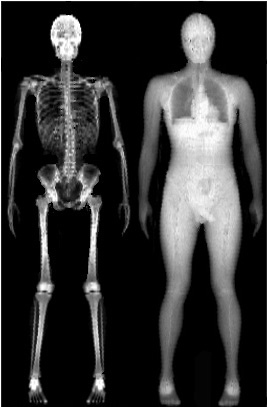 This led me to Schneier’s piece about a Welt am Sonntag article about ineffectiveness of full body scanners in airport tests in Germany. One piece in particular caught my eye:
The European parliament backed on July 6 the deployment of body scanners at airports, but on condition that travellers have the right to refuse to walk through the controversial machines.
I was told in Amsterdam that there was no option. I either had to walk through the machines, or not fly.
So then, what’s up here?
Two options. Either it’s the European Parliament not actually passing legislation, or it’s security officials not abiding by EU law (wouldn’t be the first time).
Turns out this time it’s actually the former – the vote to which Schneier and Welt am Sonntag refer is actually a non-binding resolution of the European Parliament, i.e. it is not becoming law. Details of that can be found here. So, as it stands, there is no guarantee that passengers would have the option to not have to pass through a full body scanner. However there is devil in the detail in the EP news story:
Parliament’s vote comes just ahead of an expected decision by the Commission to allow Member States to use body scanners at airports. Parliament will have the power to overturn that decision within three months.
That sounds to me that it’s going to be through comitology, with the Regulatory Procedure with Scrutiny if the original legislation was agreed before the Treaty of Lisbon entered into force, or the new comitology procedures if not. Scouring the Commission’s webpages for details leads you to this, but not updated since 2010 and not in the Official Journal…
Aaaagggghhhh.
What a complete mess. And then people in the EU institutions wonder why citizens don’t understand what’s going on…
Absolutely right Andras. Sounds a little technocratic with these so-called experts. Unfortunately, after watching the Transport Committee’s debate in parliament, many of those charged with approving or not the bill have little or no idea about the technology they were supposed to be legislating.
As for the scans being compulsory at Amsterdam, they are not and have never been. In fact, the only airports that have a no-scan/no-fly policy are Heathrow, Gatwick and Manchester. Not even the US has been able to circumvent that part of their Bill of Rights and oblige passengers to be scanned. In fact, Schiphol airport (Amsterdam) often have their scanners switched off- as they did on the 25th of Dec 2009 when the underpants bomber breezed through security there.
September will be an interesting month in the EU when the 3 months are up on the approval of the legislation. I recently read an FoI reply from the British Department for Transport which suggests that they plan to veto any new EU ruling on scanners and continue using a get-out clause to oblige air passengers to be scanned and to continue using backscatter xray scanners.
Interesting picture btw, and not at all out of date. I’d be interested to know where it comes from. It appears to be a mix between a backscatter scanner image and a transmission scanner pic. Please let me know. Thanks
Hi Jon, as for the comitology, the body scanners’ authorisation is in fact done via so-called delegated acts. These are, based on a directive or regulation referred to as “basic act”, adopted by the Commission alone with some non-binding and voluntary consultations with stakeholders, the EP and other experts. Once adopted, it can be vetoed within 2-4 months by the EP or the Council, hence the above reference to the 3 month deadline. One thing the EP or Council cannot do is amend the delegated act as it is already a final piece of legislation, it’s just under scrutiny. Hope this helps 🙂
It’s my understanding that the EU can pass whatever laws it sees fit but that the member states can also ignore such laws should they feel it is beneficial to do so. After all, wasn’t there some ruling in EU law about night flights in and out of EU airports, a rule that has been ignored by pretty much all EU members?
As for the question of body scanners, while your chosen image is out of date and a little misleading, I too cannot stand airport security theatre and have written about my concerns about this matter on my own blog.
Being stripped naked to fly on a plane, albeit digitally, is nothing short of comedy and a violation. I object to the fact these things are introduced to ‘enhance security and save time’ when they do neither! All these measures do is increase wait times and the bank balances of the companies that develop airport theatre.
If security of this level were introduced to London Transport, or the New York Subway system, how long do you suppose it would be until there was a total rethink to the the question of theatrical security and the real issue of security?
@Simon – on the pic you’re right, but free to use and appropriate images are not simple to find for this topic!
On the substance – you’re not quite right regarding EU law and what Member States can do. I do not know the case of night flights specifically, but if there is an EU Regulation or Directive about it then Member States could be fined by the European Court of Justice for breach of EU law. Alternatively if EU Member States have just agreed some non-binding guidelines about this matter then breaches would indeed be inevitable.
I agree with your concerns about security theatre, but it all comes back to paranoia and irrationality of our politicians, and populations who want to avoid something scary (albeit highly unlikely) happening to them. You’re still more likely to die in the taxi on the way to the airport than you are in the plane, but how many people or politicians think in those terms?