Enlightenment pro-EU, versus values based pro-EU – some thoughts about Garton Ash and an in-out referendum
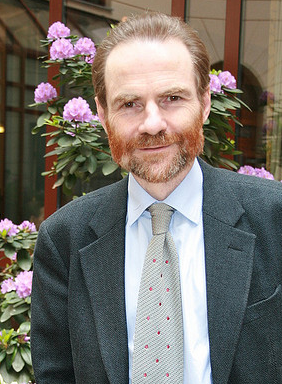
 So Timothy Garton Ash has nailed his colours to the mast in The Guardian, and stated the case for an in-or-out of the EU referendum in the UK to be held sometime between 2015 and 2020. Loads of people are jumping up and down about TGA’s piece – everyone from Bruno Waterfield and Patrick O’Flynn to the ‘oooh it’s Garton Ash’ sycophant pro-EU friends of mine are positive about it.
I’m not positive about it. Here’s why.
My reservations about referendums are well known – I do not know if a ‘fair’ referendum with a balanced debate is even possible, regardless of the subject. I am also not as throwaway as Garton Ash with the assertion that referendums are important to the British constitution, because for me such a shift to direct democracy is worthy of a debate in itself, something that has not happened since referendums started happening so often since 1997. But hell, like Garton Ash, I think this in-out referendum is going to happen anyway, so my critique of his piece is not about the need (or not) for a referendum.
Instead my critique is of the poor and old fashioned way he builds his argument. In this TGA seems to not have moved on beyond what I will call being enlightenment pro-EU*. This is the way that the European Union has been debated in the UK for the last couple of decades, dating back at least as far as the Britain in Europe campaign, but also probably before. The essential approach here is that the elites of business, politics and academia (think Garton Ash himself, and grandees like Mandelson and Heseltine) think that Britain’s membership of the EU is a good thing, and that if enough facts are presented then the population will come to the same view. To be pro-EU is a massive bean counting exercise – weigh up all the pros and cons, and of course the rational person will come down on the pro-EU side. Garton Ash talks of when the people are “confronted with the facts” they will keep Britain in.
The problem with all of this is two-fold. Firstly, the Britain in Europe campaign, enlightenment pro-EU, was top down and centralised. It relied on the people to trust their leaders, yet the experience in referendums in France and the Netherlands in 2005 shows they do not when it comes to the EU. Further, if we are to learn anything from the Irish referendum debacles over the Treaty of Lisbon it is that civil society based campaigns make more sense – any campaign must be participative, not top down.
Secondly, political communications has moved on – look at the work of Lakoff and others. The problem is that – contrary to the way Garton Ash frames it – there is no one definition of the facts when it comes to the European Union. How can a number of jobs or a GDP gain (promised by the pro-EU side) be balanced by a return of national sovereignty or no more contributions to the EU budget (promised by the anti-EU side)? The answer of course is this is a matter of personal values, not bean counting. To put it another way, even if I could prove to someone like Gawain Towler or Harry Aldridge (UKIPpers I’ve debated in the past) that leaving the EU would be detrimental to the UK’s economy, for them the reassertion of sovereignty would win. I think they are wrong, but it boils down to our respective values and not the facts as such.
All of this takes us to a very different place if, as Garton Ash wishes, we want the result of a referendum to be for the UK to stay in the EU. It means that how we talk about the European Union has to be brought into line with people’s values. It is about how we see relations between people in a globalised world. Do we believe the EU is just about a market, with the need for trade rules and little more? Is it that employee and environmental protection are equally important for all? Is the only way to stay relevant in the world to collaborate with other countries in the EU?
This is what I mean by values based pro-EU – it is because I am a social democrat that I am pro-EU. We need ways for it to be consistent to be a conservative and be pro-EU, to be a liberal and be pro-EU, and I do not mean that narrowly in terms of party political definitions of conservative, liberal etc. The ways to communicate this to different groups will vary. Different messages and interlocutors will be needed. What we most definitely do not need is an enlightenment pro-EU approach, making the same case to everyone, and assuming the facts will speak for themselves. And remember we tried that with Yes to AV, and look what happened to that. It’s high time the pro-EU people woke up – otherwise they are heading for defeat if this referendum ever happens.
* – I am aware this sounds rather cumbersome, but the term pro-European has become so complicated to define that I am loathe to use that term. Pro-EU is more accurate, if less elegant.
[UPDATE]
Simon Usherwood at the University of Surrey makes very similar points to this post, citing Daniel Kahneman. It’s worth a read too!
RE “Simon Usherwood at the University of Surrey makes very similar points to this post, citing Daniel Kahneman. It’s worth a read too!”
The blog is blocked by the EP’s IT wizards. They claim it is distributing malware.
Anne
Odd. I get no such error…
You cannot begin a debate on EU with someone bought up on a diet of ‘Barmy Brussels bans jam jars’ by quoting the visions of Monnet. Most people however are not swivel eyed UKIP ranters however and more than interested to listen your point of view (unless they don’t care two hoots either way).
I found a quote from one of Timothy Garton-Ash’s speeches one of the best ways of trying to find a way into an argument about what the EU-
By quoting Churchill’s “Democracy is a terrible form of government but far better than all the others that have been tried from time to time” it is a good way of explaining how every other system in Europe collapsed into war and why the EU is the most successful system in history at providing peace, growth and stability.
This is self-evident to a Central European but for a country whose borders never move but has inevitably sucked into every conflict over the centuries, it needs a little more explanation. But that should not be mistaken for an inability to grasp the world beyond bean counting or fervent isolationism.
“3) In theory leaving the EU could benefit the UK economy. It’s not a view I share, but I’ll debate that too.”
Ok, that’s good enough for me! 🙂 We’ll have to disagree about 5) 🙂
On Lakoff, I had originally written a bit more up there, but deleted it (for the odd personal reason that I don’t like mentioning that I have a degree in linguistics during an argument or disagreement involving the subject[*]). His work on semantics, from the perspective of a practitioner (I used to work on automated translation systems and still develop toy software tools related to that work), is just not terribly useful. No sane linguist nowadays disputes that meanings of words are socially constructed – denying in general this remains a project largely of political conservatives outside linguistics and denying it in relation to particular terms of art (which I think is more what we’re talking about here with the senses associated with political rhetoric) is the project of anyone who is too heavily invested in particular semantic associations.
You claim that my mentioning Lakoff’s views on the philosophy of maths is an “unrelated” point. That is *not* how Lakoff sees it, nor how I see it. He is explicit in “Where Mathemetics Comes From” (it has an extensive Wikipedia page full of criticism) that even basic set theory is affected or subverted by his theory of what a metaphor is: “The metaphor that Numbers Are Things yields a corresponding principle:
• An operation on numbers yields a number of the same kind.” (see http://www.cogsci.ucsd.edu/~nunez/web/INTR-04.PDF). There are hundreds of pages of this hideousness. It’s hard to come up with any definition of “kinds” which doesn’t make this claim a barefaced lie. Whatever philosophers of mathematics might make of it, in the real world, when you’re implementing a compiler to make a computer execute functions such as those in maths, you can’t allow Lakoff’s writings on maths or semantics or, as here, type theory, to influence you, because they’re just plain wrong.
So let’s be charitable and say that much of the domain of application of Lakoff’s expertise has changed out of all recognition in the last fifty years due to the explosion of computing, and that these ideas about metaphor are uniquely strongly obsoleted in formal languages such as maths and computer programming languages, in which metaphor is effectively non-existent. What we’re left with is the application of his work to natural languages and their interaction with human reasoning.
The point that Lakoff makes strongly is that so-called “Enlightenment”-style rationality isn’t really how most people think. If you want to know the details, stop reading Lakoff and read Kahneman. Lakoff imports massive amounts of baggage: his ideas about “embodied minds”, their effects on his extreme anti-Platonist philosophy of maths, the positions he’s had to take on evolutionary biology due to his arguments with Chomsky and Pinker, the skepticism about logic itself (rather than the extent to which people employ it(!!!)), etc, but the real problem is the huge lack of rigour caused by the unsupported ascription of particular thoughts to particular metaphors (you’ll notice Kahneman barely mentions metaphor or prototypes despite Lakoff claiming their importance to his work).
An example of (what I consider) Lakoff’s lack of rigour is this bizarre piece about the 1991 Iraq War: http://www2.iath.virginia.edu/sixties/HTML_docs/Texts/Scholarly/Lakoff_Gulf_Metaphor_1.html
To be fair, I explicitly flagged up that my attack on Lakoff would be fallacious as an argument against
what you were saying, but this was to make the point that too much Europhile argumentation works this way: “oh, Tony Benn and Enoch Powell wanted out of the EEC, but here’s what they think about race relations, foreign policy, the Episcopalian mode of church government, etc”, “UKIP are closet racists”, etc.
Framing matters very much, as you say. My interests are mainly in the real, substantive arguments about the EU, not how they’re presented to the public. Lakoff identifies the issues around framing correctly, and with more urgency than practically anyone else. My only point, which I have made at the appalling length necessitated by the unbelievable-to-outsiders poor state of linguistics, is that Lakoff’s on balance a very bad influence outside linguistics, and that much better work is available, such as that of Kahneman and Tversky.
[*] specifically, I was once faced with a colleague trying to settle a dispute about the grammar in a press release on the basis of her receipt of a diploma in English literature from a liberal arts college somewhere in the US. You either say “well, I studied actual grammar in a linguistics degree at Cambridge” and hurt their feelings in front of people you both have to work with, or you shut up and contemplate human vanity.
@Jon I’m not trying to twist your words, that’s not fair. I am sure that I sometimes unwittingly overstate or underargue my case, either due to some unstated assumption that others would not share, or due to ignorance of some fact that others would be aware of. You certainly do the same at times.
@Martin – I’m not sure I can quite be bothered to rebut each effort you make to twist my words, but I’ll at least partially reply.
Both you and I find Garton Ash tiresome, so we agree on that. However he has a lot more people that listen to him than either you or I do.
Re. Lakoff or Kahnemann or whoever else – I am not aware of Lakoff saying mathematics is socially constructed. But you have straw man tactics there – you use a completely unrelated point to try to demolish the legitimacy of the person whose views I cite, rather than actually trying to determine whether his views are, in this circumstance, correct. Framing matters, the words we use matter. The pro-EU side seems completely unaware of this. Do you agree with that?
It is a perfectly fair position to say I am opposed to referendums. You may cite Ireland and Australia, I can in return cite Germany where referendums are still banned nationally because of the way they were used in the 1930s. And, as documented over the long term on this blog, it’s not as if I think representative democracy is all fine and dandy either. I’ve been involved in 2 referendum campaigns in the UK – to establish the Welsh Assembly (where I was for YES and we won), and AV (where I was for YES and we lost), so it’s not just I dislike referendums because I get the wrong result. How power is wielded in a political system is important, and the balance of powers between institutions needs to be carefully looked at. In the UK referendums are used as a tool to kick an issue off the everyday agenda in Westminster, and that is definitely not right.
On your numbered points:
1) Perhaps my phrasing was poor, but there is no single interpretation of the facts. There are the numbers, yes, but what they mean to each person will vary. Further, it is futile to even try to get a common understanding of the facts across the spectrum of pro-EU and anti-EU people. Look at the debate for the last 10 years – it’s not doable.
2) I have no idea how this relates to the matter at hand at all.
3) In theory leaving the EU could benefit the UK economy. It’s not a view I share, but I’ll debate that too. And yes, the way EU policies currently work they may increase inequality. How you construe from my words that I am making such concrete assertions is beyond me though.
Also how you possibly say I am “avoiding real arguments” in a blog post that’s about framing and a response to one Guardian column is beyond me. This is not an assertion of the whole damned argument for the EU!
5) No, I am absolutely NOT admitting that. For any thoughtful liberal or conservative it should be evident how being pro-EU and other aspects of their ideology are not contradictory.
We’ve already raked over how insulting your views on referendums are to citizens of countries like Australia and Ireland where they constitute a vital check against collusion between the political parties and are only disparaged by cranks and extremists.
1) Don’t poison the well. There is one definition of the facts when it comes to the EU, not “no one definition of the facts”. You’re entitled to your own opinion, not your own universe.
2) if you don’t know how numbers of jobs or a GDP gain can be balanced by some more abstract concern, then at least consider the possibility that this is your fault, rather than some intractable problem. For example, the NHS (or rather, NIHCE) trades off money against various types of medical suffering (pain, lack of mobility, physical diability, mental anguish, etc) when working out which pharmaceuticals to spend our limited tax money on. This is done by surveying large numbers of people from the general public about what kinds of suffering they’d prefer if they had to choose for themselves, and reifying this as the QALY. As a society in the UK, we’re prepared, in effect, to pay about 20000 pounds on medical interventions that would extend someone’s life by a year at full health (or longer under one of the various forms of suffering considered).
This is morally obligatory: you cannot, when faced by claims for taxpayers’ money by different groups of people experiencing great pain (e.g., cancer victims), just hand out that money at random on drugs that might be too expensive, not work, etc.
3) You may impute to the UKIPpers the view that it’s worth sacrificing some economic prosperity to regain sovereignty, but what about people who think that that would be a bad tradeoff if it were true, but that it is moot because leaving the EU would be *good* for the UK economy?
And where, O soi-disant social democrat, is the concern for the *distribution* of income resulting from EU policies, rather than its sum? Aren’t social democrats supposed to care about the possibility that free trade might widen the gap between rich and poor, even as both become better off? Is it literally *impossible* that the EU might do this?
Fundamentally, I’m *not* with Gawain Towler if he really holds the view you impute to him: if it’s not in the UK’s interests to leave the EU then we shouldn’t. I believe that it is in our interests to leave, but *am open to persuasion*. You’re not doing that: you’re just talking about how to get a referendum past the British public, proclaiming that the question can’t be resolved anyway, and that the UKIP people wouldn’t ignore the answer if it could be obtained.
This doesn’t help your cause – the more you avoid the real arguments, the drier the Eurosceptic powder remains come the referendum.
5) If you’re admitting that it’s not obvious that a liberal or a conservative can be pro-EU consistently with his other beliefs, that should be utterly fatal to the EU’s legitimacy.
I shouldn’t take any advice from Timothy Garton Ash or Lakoff.
Garton-Ash is just a ghoul: he couldn’t wait for the victims of the Madrid bombings to be found let alone buried before he was using their deaths to advocate further undemocratic expansion of EU powers. At the very least he could have condemned the murders. But he didn’t – maybe
the word limit did not permit both such a condemnation of terrorist slaughter and the obligatory boosting of European integration. I assume other Europhiles feel normal human emotions like the general population and that Garton Ash is some sort of statistical outlier, empathy-wise.
Lakoff thinks *mathematics* is socially constructed – if he can’t get *that* right, what chance has he got of being right about something much harder to reason about like political psychology?
If you find yourself agreeing with Garton Ash or Lakoff, that should be a sign that you ought to re-evaluate your position.
As Dr Underwood says, get your behavioural psychology from Kahnemann, not Lakoff.
Sorry if this reply sounds like the sort of “ad hominem tu quoque” more often found in the tireless attempts of Europhiles to conflate Euroscepticism with racism. I’ll respond to the substantive points in your article later.
Have you made the social democratic case for the EU somewhere? Seems to me general EU is soc dem neutral (mostly) but eurozone is definitely neoliberal/anti-Keynesian. http://www.craigwilly.info/?p=1286