Cowen’s wish list
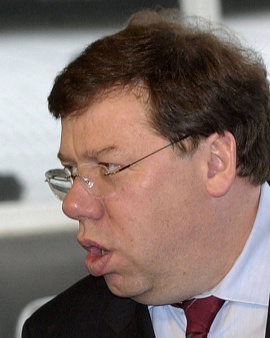
 Mark Mardell has a list of the Irish population’s 8 concerns about the EU as perceived by Taoiseach Brian Cowen, and presumably each of these is a factor in the No vote in the referendum on the Treaty of Lisbon. These 8 issues are:
- World trade talks.
- Suggestions of tax harmonisation.
- Loss of a commissioner.
- Change in Ireland’s voting strength.
- Lack of democratic accountability of the EU high representative and president of the council.
- Possible European Court of Justice rulings on areas like abortion and euthanasia.
- Insufficient workers’ rights.
- Defence policy.
So let’s have a look at each of these.
World Trade Talks – the fear I assume is that reduction in tariffs on agricultural produce will hit Irish farmers hard, while ongoing reform of the CAP (part driven by the WTO) is not helpful either. If you see the narrow Irish interest on this matter it’s a valid concern, but it has nothing to do with the Treaty of Lisbon – the Commission even now negotiates in the WTO on behalf of the Member States. So this is a policy issue, not something related to the Treaty. Impact of the Treaty of Lisbon on this issue: 0/5
Tax Harmonisation – tax issues are still agreed by unanimity in the Treaty of Lisbon, and as I’ve previously argued, this is a tricky political issue for the EU to face. 0/5
Loss of a Commissioner – the Treaty of Lisbon would reduce the number of Commissioners to 2/3 of the number of Member States, on an equal rotation. The Treaty of Nice also commits the EU to reduce the number of Commissioners but does not state how many Commissioners there should be. A unanimous agreement between the Heads of State and Government could even agree to maintain the number of Commissioners at 27. There are solutions, but it’s a valid concern. 3/5
Voting strength – there are a whole number of issues that could be rolled into this one. First of all the Qualified Majority Voting system would be changed under the Treaty of Lisbon from 2014 onwards, with 55% of Member States representing 65% of the EU population required, as opposed to the current system of 255 of 345 votes, a simple majority of Member States, and 62% of the EU’s population. The new system is largely seen to favour the larger Member States, but it’s medium sized ones like Poland that take a larger hit than Ireland, and Ireland has more MEPs per head of population than the larger Member States do. Alternatively voting strength could also encompass the fear of giving up the veto in a number of areas, but as tax is not one of them I’m not sure whether this is relevant. In short there are valid concerns to the Irish in all of this, and reassurance from the larger Member States is needed. 5/5
Lack of democratic accountability – overall the Treaty of Lisbon improves democratic accountability a bit, and the High Representative for CFSP and the rotating Presidency of the European Council are not democratic at the moment. The flip side is of course that if you create more powerful positions and don’t make those positions democratic you raise additional fears. 2/5
ECJ rulings on abortion and euthanasia – often raised in the debate in Ireland prior to the referendum, but the Charter of Fundamental Rights in the Treaty of Lisbon only applies to EU legislation, and there are no plans for this matter to be legislated for at EU level. Not a valid concern in my view. 0/5
Workers’ rights – laughable that this should be raised by Ireland, one of the most laissez-faire countries in the EU in this regard. Matters like maternity and paternity leave and non-discrimination in the workforce in Ireland have been improved thanks to the EU. Even if the concern could be shown to be valid it has nothing to do with the Treaty of Lisbon. 0/5
Defense policy – the Treaty of Lisbon does try to strengthen the EU’s role in the world, but the wording is such so as to assuage fears of neutral countries such as Ireland. No Member State is obliged to send troops on any EU mission, and there will be no EU army and no EU conscription. Ireland would however have to live with the EU playing a greater role on the world stage. 2/5
In short I’m none to impressed by this list – it strikes me that this is more a summing up of general concerns and gripes rather that a sensible effort by Brian Cowen to work out a way forward after the Irish No.
let the Irish (some of us) argue until we are blue in the face – that theres everything wrong
The “no” vote is really about the present Government, the recession and the rising oil price etc – if we don’t understand the question, we ll say no anyway.
There will be many people outside Ireland that will research the reasons behind the “No” vote and come up with possible reasons but they won’t take into account our mentality. It is not about rejecting Europe, its about rejecting today’s “local” government!!!
If the EU is to take away Ireland’s membership, Ireland will beg for “another chance” and will say yes to anything even this Lisbon Treaty – if it happens to England, they won’t give a toss!
Rant over.
Hows you, Jon?
Martin Keegan,
Your “how dare you … before replying to my post” is sadly revealing.
Feel free to browse the hundreds of blog and forum posts in three languages where I have laid out my reasoning, some with comparative aspects, but I wouldn’t dream of ordering you to do it as a prerequisite for discussion.
I just don’t feel that you are a person I wish to discuss with right now.
Ralf, you are just setting up a straw man. I mentioned the Australian system. As you will know (and if you didn’ know, how dare you not bother finding out before replying to my post?), amendments to the Australian federal constitution take the form of a parliamentary act amending the constitution which may only come into force if ratified at referendum.
In this case, the “methods of representative democracy” are employed in addition to the referendum, so their superiority or otherwise is irrelevant. The referendum check prevents a temporary legislative majority on a particular question being able to entrench its position when it is unrepresentative of the electorate as a whole.
(There is a slight difference, inasmuch as constitutional amendment bills don’t require the consent of both houses, but in practice this is irrelevant – I think they go through both houses anyway)
Why should the argument that governments and parliaments learn from their mistakes not apply also the electorate as a whole?
Martin Keegan,
Irrespective of the outcome(s) referendum is a blunt tool for complex questions.
Government preparation, parliamentary debate, committee work, expert witnesses, final votes … The methods of representative democracy are superior.
Call it whatever you like, but it is my considered view.
Specifically, the referendum genie refers to the difficulty to remedy less fortunate decisions. Governments and parliaments change, and change opinion, with somewhat greater ease, thereby being able to learn more easily from their mistakes.
@Ralf Grahn, this claim about referendum genies and farewell deliberative democracy, whatever it is, is just rhetoric, isn’t it? Has deliberative democracy collapsed in Australia given the rate of referendums at one every two and a half years since Federation? No of course it hasn’t; the very idea is preposterous and offensive in its disregard for the facts.
I don’t get this argument about tax harmonisation. Most EU competences are acquired not by treaty change but by treaty violation ratified by the Luxembourg Court, which has fewer than ten times (maybe fewer than three) in fifty years decided that a particular matter was outside the EU’s competence. Not only do the Irish have to worry about competence creep and a partisan judiciary, but horse-trading. It’s no good for tax harmonisation to require unanimity if the Irish Government can make a deal in COREPER trading off Ireland’s veto for something else.
Once the referendum genie is out of the bottle, farewell deliberative democracy.
¤¤¤
How on earth do some European leaders imagine that the concerns listed could be palatably packaged and served to the Irish voters in order to ‘get around’ their No vote?
The only legitimate way forward is to treat the Irish electors as adults. Their verdict may be both deplorable and mistaken, but the only legitimate response is to take it seriously.
If they, someday, change opinion or face another question, they have the political structures in place to initiate change.
¤¤¤
Naturally, the other signatories have their own interests to tend to. If they or part of them want to forge ahead, they have to accept the necessary means.
But the lack of EU level democracy and accountability is such that the political leaders seem to push the European Union more and more against the current of public opinion, perhaps mistakenly directed, but real all the same.
The Lisbon Treaty has some merit, even from a democratic viewpoint, but pushing on regardless of public opinion seems to increase citizens’ disdain.
Are the political leaders wise, if they think that once they get the substance of the Lisbon Treaty into force, they can live a decade without treaty reform?
Or should a group of member states clearly state that as soon as the Lisbon Treaty is in force, they are going to lay the foundations of a democratic union (more or less like the US Bill of Rights was introduced)?
If no member states are ready to embrace EU level democracy, or if they are ready to be retarded by the none-speed intergovernmentalists, they have earned the increasing hostility from the EU citizens.
¤¤¤
It is hard to believe that the European Union is going to become a real success story if its institutional structures and democratic legitimacy are going to be dictated by the member state ranking somewhere like 25th in enthusiasm for reform, out of the (still) 27.
Operation manual for EU reform:
1. De-install ‘liberum veto’.
2. Install the Lisbon Treaty and EU level democracy and accountability (at least for the willing member states).