The UK-EU argument is a proxy for the vital debate about the UK’s economic, geopolitical and democratic future
 There are two common, and incorrect, justifications for not acting in politics.
The first is that now is not the right time, because at the moment everything else is more important. That is the justification most often used by opponents of an In-Out EU referendum in the UK, and is the same reasoning that has prevented the House of Lords from being reformed for the last few decades.
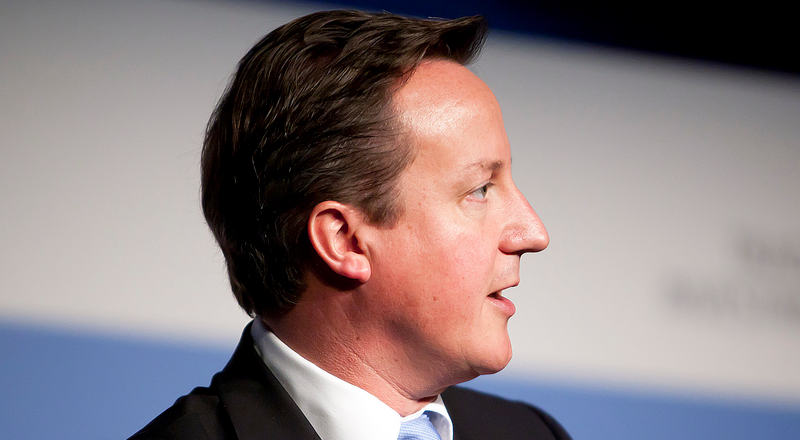
The second reason is that ‘people’ do not care about some issue or other, and as a result politicians should not focus on the issue. That is the argument that, rather predictably, was wheeled out by Andy Burnham as a critique of David Cameron’s speech.
The problem is that, as I see it, is that the UK-EU debate is a sort of proxy for three larger issues that, due to the structure of UK politics and government, and the relationship between the media and politics, we never actually get to properly talk about. Perhaps some of these issue could be opened up now.
The first major issue is that the UK lacks a proper and nuanced debate about the economic future of the country. The very essence of New Labour was to emphasise the value of the private sector (and to bring the private sector into provision of public services), and this process has been continued by the current government. The whole repatriation-from-the-EU debate pushed by David Cameron, and rumblings about loosening EU social policy from him and the Fresh Start campaign, are proxies for the push for a further free market, deregulated vision for the UK. Labour would sooner seek solace in the Burnham ‘people do not care’ line, or continue to defend the line that Cameron’s approach is bad for British business (the Emma Reynolds line), than defend the fundamentals of the Single Market – that freedom to trade within the EU has to be accompanied by high social standards. Thankfully the TUC seems to have understood this debate, but we are still a long way away from debating the economic future of the UK sensibly, and drawing every party with an interest into this discussion.
The second issue is the geopolitical future of the UK. As Mark Mardell rightly points out, US politicians “simply don’t see Britain – especially with a declining defence budget – as anything more than a medium-sized power in its own right”. How should the UK react to this? To try to carve out a new role as a medium sized power, with the ability to pick and choose its interventions? Or to collaborate in the EU first and foremost, and with close EU allies seek to forge a European vision for how peace and prosperity worldwide can be fostered? The former would seem to be the Cameron line, the latter is more the Timothy Garton Ash approach. But here too the fixation must not be with the EU as such, but to discuss the EU and its foreign policy, and what role the UK should have within that.
The third issue is that the shape of the UK’s democratic future is rather unclear. The issue of whether to hold a referendum on the UK’s membership of the EU once again raises the issue of what role direct democracy should play in a country that, until the late 1990s, had held only one referendum of note. If the people are to decide about the EU, why not about membership of the UN or NATO? Or reform of the House of Lords or, if it is so important to people like Andy Burnham, the ‘important’ issues like schools and hospitals? The UK is suffering from plunging trust in its political institutions and has low and declining party political membership, and with the rise of the anti-party party UKIP, anti-EU feeling is somehow part of anti-establishment feeling. These questions are valid at EU level too – what is the best way to achieve democratic accountability at EU level? Or is it, as Cameron seems to imply, impossible and should not really be attempted? Whichever way, the integrity of UK democracy is not altogether assured, and how the future of democracy will look is worthy of serious consideration and debate.
So, in conclusion, the correct response to David Cameron’s call for a referendum is not to say ‘not now’, and not to say ‘this doesn’t matter to people’. For while the EU in and of itself may not seem to matter much, the deeper questions – about Britain’s economic, geopolitical and democratic future – are vital to each and every UK citizen, and the debate about each of them must not be ducked.
The UK has no voice inside the EU it is one 28th fighting its corner against a continent that has an entirely different mind-set to our own. It is like trying to get the Taliban to sit & talk to the Archbishop of Westminster it wont work. It is far better for us to go alone in the world minding our own interest around the world. We have the physical power to look after our own assets & interests around the world, what we don’t have anymore is the strength to look after other peoples interests especially ones that so fundamentally don’t share out outlook & sensibilities. The EU is far more likely to in turn get its act together & become a solidified entity without having to accommodate UK sensibilities so it strikes me that a separation of the EU from the UK would be a win win situation for both parties.
None of you really know anything about life in the eu.iv lived in a few eastern block countries ie-bulgaria,slovakia(i was there when the govenment was giving out free one way passes to the uk to get rid of their unemployed),romania.
its just madness 24/7 , you couldn’t even make a movie as bad as life in the eastern blocks, murder,drugs,prostitution are the only way of life for around 70% of people. most people who have visited have just gone to holiday hotspots which i might add are safe only because the mafia keep the tourists safe not the police they do nothing but give out speeding tickets but have no say what so ever on the normal everyday life of the people!
So the rubbish the mp’s try to fill our heads with about the eu being so great is complete bullshit!!! it shall only bring bad things to the uk and the uk will look like a crime scene within 20 years.
So while you sit in your candy coated dream world and think you have an idea of what goes on in the eu our country will be turning into a third world horror movie before you wake up!! and smell the coffee!!
When people take the time to read the treaties and study the structures, pronouncements of it’s leaders, etc, then I have found that they invariably become sceptical of almost everything the project offers.
The shocking ignorance of even ministers about the substance of the EU is sadly typical. This is quite deliberate though, as the whole subject has been portrayed as ‘boring beyond belief’ so most leave well alone. The central problem that europhiles have, about clearing the air and having an honest debate is that they are facing 40 years of lies and deceit. When the likes of Benn and Powell warned of the political centralising intent of the project they where condemned as liars and lunatics themselves. This tactic of denouncing people telling the truth was utterly effective. The result of that though was that the country voted to remain in the EU based on these political denouncements. Many people supportive of the EU are so becasue they still hold the belief that those latter day ‘sceptics’ are simply lying still about these things.
So, you are in a bind. Do you perpetuate the lies and use the disgraceful tactic of denouncement to maintain your objectives… or do you open the debate out, honestly discuss supranationalism and centralisation, subsidiarity and the rest and admit that the ‘Pro’ campaign has been based on a profound deciet of the people?
Another interesting post Jon, thanks.
Reading the various reactions to the speech I find myself coming back to a couple of points that seem to always echo in my ears reading coverage of European issues.
1) The apparent European obsession with being a global power: does every member of the political class in Europe obsess over the fact they aren’t as powerful as their forbears were in the 19th century? It sometimes seems like they do given all the continuous carry-on about both the building of Europe’s global influence and what influence Britain would lose if they exited the EU. As a citizen of a small to middling country at the arse end of the world I find these discussions by countries in the top tier of international influence, wealth and power quite bizarre. They only make sense to me if I imagine a political class with a small-dick syndrome looking across the Atlantic and longing for past imperial greatness when the world revolved around Europe.
2) Do the supporters of European integration have any positive arguments? Economic doom and war seem to come out of the mouths of most pro-Europeans (Jon, your being a notable exception) as an almost automatic response. The few positives you here refer to a generally mythical interpretation of the past (pre-1973 generally) and scape very lightly over the present and future. How can European integration have a future if pro-Europeans don’t have a positive, forward looking story to tell, one that will win popular adherence to the future of the European project.
Again and again these two points come back to me reading the responses to Cameron’s speech, as journalists, pundits, diplomats and politicians trot out the same lines.
Lastly I think your point of the UK’s democratic future is well-made, but equally connected is Europe’s democratic future: you can’t resolve one without the other in any EU member state surely? Indeed, I find it ironic that the UK’s attempts to try and find a new democratic formula that works for all its regions mirrors the same need in Europe as a whole. The current European level democratic structures demonstrably don’t work because they haven’t been able to build the necessary degree of popular political legitimacy to be effective. All the states of Europe need to think about how their democratic systems connect from local to state to national and then onto the supranational: how do these connections work to ensure input and output legitimacy, and thus popular legitimacy in the years ahead. Here in Australia and in other successful federations like Canada and the US, the levels are intimately linked: institutionally, culturally, and politically. The concept of subsidiarity in that sense is actually an admission of failure to link the levels of democratic governance in Europe; indeed it seems to deny the possibility given how it if often defined. Certainly the EU faces major problems that member states do not: most notably the lack of a European demos and lack of a European public space. Yet any national democratic debate has to include the European level, and that require a clear and positive message about Europe’s future, which can’t simply be that its elite get to plan big man on the world stage once more or that the alternative to more Europe is the 1930s.
Jon, an excellent and provocative piece with which I agree wholeheartedly.
My initial read of DC’s speech- leaving aside the incoherence of his argument and the messy missing details of what he actually seeks- was an impression of a man struggling to come to terms with issues and risks he is only slowly appreciating.
Like a man who only now realises his trousers are on fire.
He is contorted. On the one hand, he has a visceral English, Home Counties, privileged world view/political ideology (or should that be County View?): reliance on a small state, belief in finance capitalism (his father was a wealthy stockbroker), surrounded by the cosy certainties and wealth of his Notting Hillbillies. It is a very narrow, almost Utopian world. Neither economically nor politically is it a basis for reforming the UK or the EU- and you correctly see this question as underlying our EU debate.
On the other hand are the brutal realities of a competitive and chaotic, sometimes anarchic world. Cameron is being tapped on the shoulder by friend and allies alike and told: ‘Think Again. You need the help of your friends, neighbours and allies in this world. The EU is critical to your geopolitical survival. Outside it you will lead a diminished,vulnerable and more uncertain life. And this is a historically critical juncture. Don’t be late to history.’ Cameron is slowly realising that the EU is and always has been a political as well as an economic process. His head is saying- stay in and develop this Union.
The question is: has he got the statesmanship, the long term vision and sense of history to think this through and lead the debate? Cameron is struggling to escape his gilded cage…My worry is that he has enough cash stashed so that any experiment he makes on us will escape him yet plunge the rest of us into a diminished and more uncertain world- where populism and more extreme voices will rise.
Well argued!
I hope this referendum (assuming there’s now a 90% chance of some kind of EU referendum in the next 5-10 years) will be a chance to flush these issues out into the open. Ideally, it will force a proper debate about Britain’s future.
Both sides of the debate agree that the public is largely disinterested in the Europe question, and both sides (more or less) agree that this is a bad thing. True, David Cameron’s speech made hardly a ripple in the “real world” outside of the Westminster village and the Brussels bubble. However, I was somewhat encouraged to see several of the UK political blogs and Twitter accounts I follow starting to show a keener interest in things EU, with many of them complaining that they were going to have to read up about a horrifically boring set of issues and finally make their minds up. I take this is a good sign, and hope that 5+ years is enough time for the debate to filter out into the public discourse.
However, even if the broader public doesn’t engage in a proper discussion on Europe’s future, I would still support a referendum so that, at the very least, MPs are forced to have that debate.
@Laura – ahem, yes. I have been mulling the regional aspect for a while, and have some rough ideas for a post about that too. When time allows…
@DK – yes, that’s also valid to include in there.
Good post, Jon. However…
“How should the UK react to this? To try to carve out a new role as a medium sized power, with the ability to pick and choose its interventions? Or to collaborate in the EU first and foremost, and with close EU allies seek to forge a European vision for how peace and prosperity worldwide can be fostered?”
There is a third option: that is to say, “who gives a stuff? Perhaps we should stop sticking our noses in everybody’s business—at great cost and little advantage to ourselves—and just open our borders for free trade….?”
DK
Very interesting post. I think there is another element to all this, the whole question of “UK” identity – what it means to be British, Scottish, Welsh, English and of course Irish within the UK. The Scots and Welsh have perhaps begun this debate around devolution, and it will surely be part of the Scottish referendum on independence. But there has not been any debate around English identity or a debate including all the constituent parts around British identity — and not only what it means to be British on the world scene but also at home. It seems to me that forging an identity in response to a (mythical) Brussels-bureaucrat-bogeyman is perhaps not the best way to work out what being British in the 21st century actually means.