From a friend a few days ago on Signal: “Empfehlenswerter F.A.Z. Beitrag: Wie die Bundespolizei Züge an der Grenze kontrolliert” (“Recommended F.A.Z. article: How the federal police check trains at the border“)
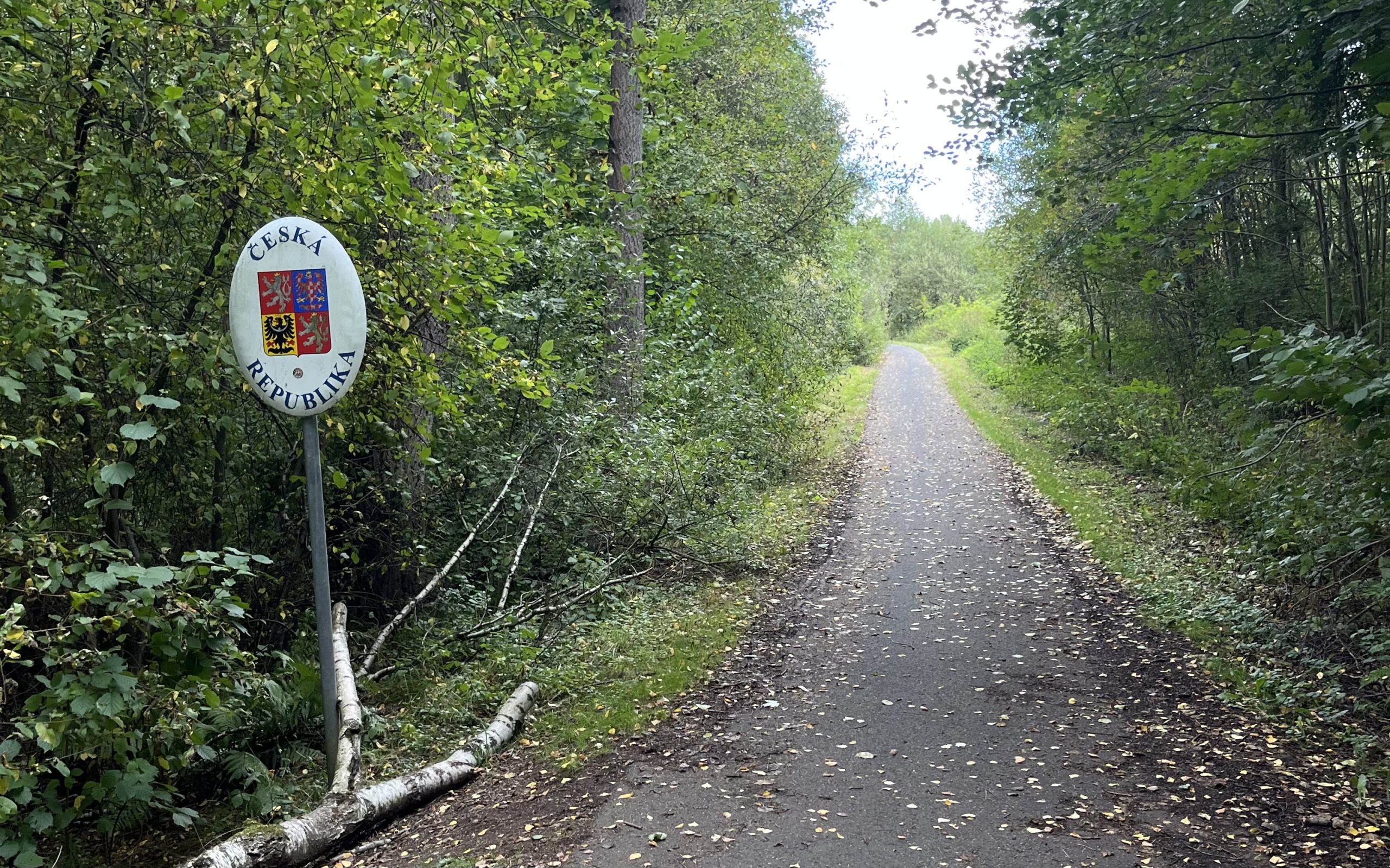
I open it. And it is terrible. Sure, the images might be nice, but this is not journalism. It is a FAZ reporter following border police around for a day, and the border police performing because there is a journalist there. I did more systematic work on this in the two hours I was in Kehl in August. And damn I have been to a lot of borders, including the one shown in the cover picture of this piece – a lane so small from Germany to Czechia there were no police in sight.
The piece my friend sent me is only Empfehlenswert in how it shows how completely lacking objectivity and knowledge FAZ is.
And yesterday another friend sent me this one: “Let’s end Eurostar’s monopoly on cross-channel rail“, FT this time. This isn’t actually wrong, although it tells us nothing new. But given that I have often been quoted by the very same FT about this exact topic, there’s a pretty solid chance that some of my words influenced the phrasing of this one.
Neither of these friends, both people I have known more than 20 years, mean badly. Their thinking is “Here is a reputable publication that has written about a topic Jon knows about, maybe he can learn something from it“, but my reaction upon receiving such a link is somewhere in between “How bad is it going to be this time?” and “Oh I hope this simply isn’t wrong“.
Neither of them can really imagine that I might know more about borders than a FAZ reporter, and more about Eurostar than a FT columnist. But I do know more and indeed – in the FT case – have been quoted by them as an expert on the topic.
There is a term for this trust in the media, even when it does not make sense: the Gell-Mann amnesia effect.
Here are Michael Crichton’s words about it, naming it after his friend the physicist Murray Gell-Mann:
You open the newspaper to an article on some subject you know well. In Murray’s case, physics. In mine, show business. You read the article and see the journalist has absolutely no understanding of either the facts or the issues. […]
In any case, you read with exasperation or amusement the multiple errors in a story, and then turn the page to national or international affairs, and read as if the rest of the newspaper was somehow more accurate about Palestine than the baloney you just read. […]
That is the Gell-Mann Amnesia effect. I’d point out it does not operate in other arenas of life. In ordinary life, if somebody consistently exaggerates or lies to you, you soon discount everything they say. In court, there is the legal doctrine of falsus in uno, falsus in omnibus, which means untruthful in one part, untruthful in all. But when it comes to the media, we believe against evidence that it is probably worth our time to read other parts of the paper. When, in fact, it almost certainly isn’t. The only possible explanation for our behavior (sic) is amnesia.
So now you know the effect.
And now you also know how you might approach a knowledgeable friend with a story. If you make a connection in your head as my friends did in these cases, the person you are about to contact is likely to know more about the topic than the person who wrote the piece. So enquire with the person you’re contacting whether they think the piece is good, bad or indifferent. Definitely do not assume that – because it appeared in a semi reputable media – it necessarily is any good.