Rumours of tensions between David Cameron and Boris Johnson rumble on, as covered today by Alex at Labour List. I don’t want to comment on Boris vs. Cameron as such; others are better placed to debate that. I just have 2 small remarks.
First, Britain has had more than a decade of devolution now, a little less for London. Yet why do we still assume that parties at each level have to stand for the same things? It’s implicit in the way Boris vs. Cameron is reported that they must eventually agree. Why? It might not be very stiff-upper-lip British to air conflicts in public, but if Boris reckons he has London-wide Tory support for what he stands for then he would be negligent to not stand up for those views. I also wonder how this sits with Cameron’s claim to devolve power to local communities? I assume he reckons no conflict with a parish council is going to end up tarnishing his image, while a conflict with Boris will. It’s post-modern smooth over political substance – typical of Cameron.
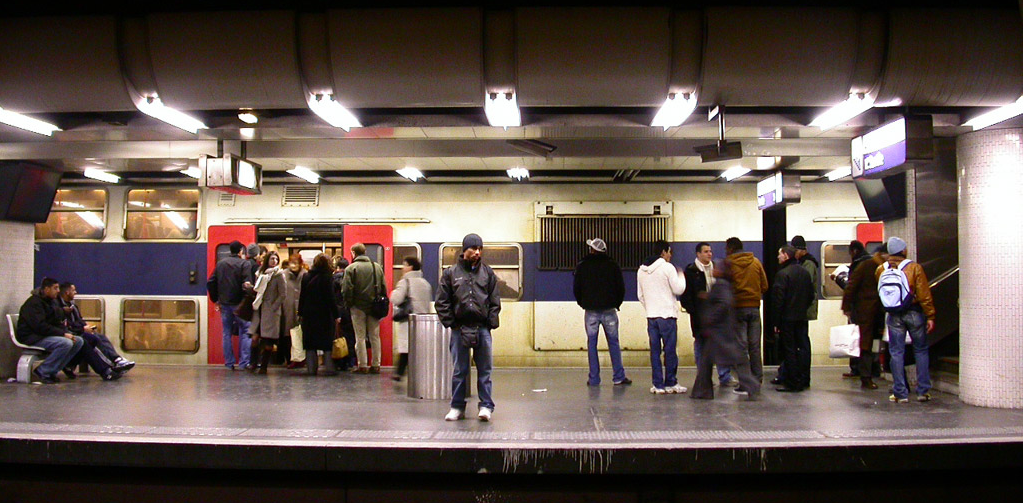
Second, why, oh why, would anyone seriously want to oppose Crossrail as Next Left alleges that Cameron does? OK, the line does not serve too many Tory constituencies, but London is projected to grow over the next few decades and the London transport network is already horribly saturated. Why can we not even manage to get behind one high speed, high capacity line? After all Paris has just five similar lines (RER), each with 10 carriage trains, some of them even double-decker. The hub station alone – Châtelet-Les Halles – handles almost half a million passengers a day on its RER platforms. Anyone who has ever tried to take the Central Line at peak times must clearly see that more east-west capacity is vital.
Can’t agree more with you!
Yes, the cleanliness of French stations isn’t that great but it’s not worse that London on Friday nights. What’s unique though is that they made all terminii stations into through stations: Gare du Nord, Gare de Lyon, etc….
In London, all trains stop in St Pancras, Waterloo, etc… Not sure why they could not resurface in Liverpool street from Waterlook for instance, the tunnels are almost all there (the W&C line, though they’re probably too narrow but could be extended to Moorgate and thereafter).
Where in London / Zone 1 is there a line that carries people as far and as fast as the RER between Gare de Lyon and Gare du Nord?
Yes, Châtelet smells and is overcrowded, but so too are loads of underground systems all over the world. The Paris RER at least has the merit that it’s high capacity and (relatively) fast and efficient.
Well I wouldn’t call the RER lines exactly fast. Also Châtelet-Les Halles is horrendously over crowded. And dirty