Brexit: something has got to give. But what? And when?
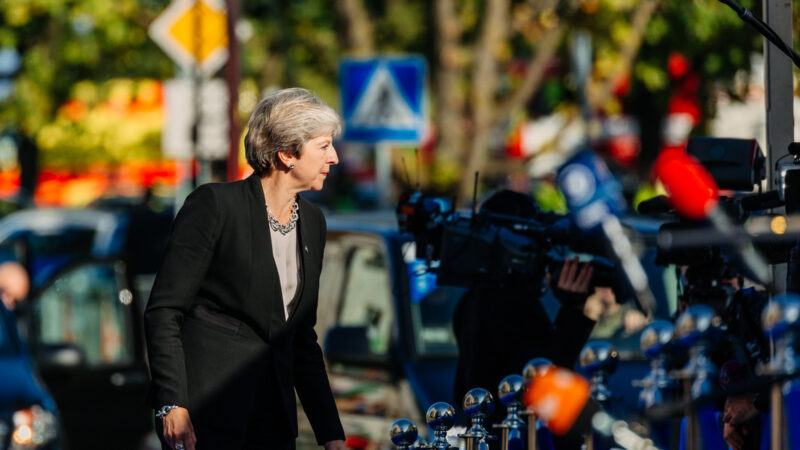
Last week’s European Council in Brussels – as expected – did not agree that sufficient progress had been made on the three first stage Brexit issues (cititzens rights, financial settlement, Irish border) to allow the negotiations to move to the second stage. There were some friendly noises, but ultimately there is considerable disagreement still. So the decision to advance is delayed until December.
In the House of Commons, 300 amendments have been submitted to the Repeal Bill. Among those are thirteen amendments with enough backing from Tory backbenchers to be able to defeat the government. Plus one of the thirteen amendments, tabled by Dominic Grieve, would give Parliament the power to block a No Deal Brexit scenario (more from Politico here). The delay means the legislation will only be debated after the parliamentary recess in November, i.e. after 13th November. That means getting the Bill through the Commons by Christmas (even if thorny amendments can be accommodated) is going to be a push, and then passage through the Lords is still to come. The Repeal Bill is vital to reassure everyone in the UK about how the UK-EU legal framework is going to look post-Brexit; agreeing it is at least delayed, and is potentially in jeopardy.
The Sun (warning: sidebar of shame) today reports that even discussing the shape of the UK’s trade agreement with the rest of the EU is to be delayed in Cabinet, fearing discussing it will prompt resignations. One is left wondering whether the EU refusing to move to the second stage of negotiations is such a bad thing for the UK side if the cabinet cannot even debate, let alone agree, what it wants to push for.
Meanwhile Philip Hammond has to prepare a budget to be presented on 22nd November, against a worsening economic backdrop, while voices to sack him grow louder. Goldman Sachs has already been pretty blunt about Brexit and is moving some staff to Frankfurt, and other banks are ready to put contingency plans into action. Airlines need to plan their routes 12 months ahead of spring 2019, i.e. spring 2018. And on Northern Ireland, the DUP (that props up May) refuses any hard border in Ireland, but the government’s line is still that the UK will leave the Single Market and the Customs Union, and that necessitates a hard border.
And – worst of all – all of this with the Article 50 clock still ticking.
The UK has used 207 days (or 28%!) of the Article 50 period and has nothing to show for it. There are only 521 days until the UK could crash out. Plus it is generally assumed that everything would need 6 months to be ratified, so that leaves roughly 340 days to conclude a deal.
Something has to give here. Either May’s cabinet has to suffer resignations, putting her position in peril. Or rebellion in parliament cannot be held back. Or the Brexit negotiation period has to be extended. Or the government collapses and the UK needs new elections.
Because keeping on delaying and waiting is going to keep upping the pain on the UK economy, and making all of these issues even more complex to solve.
So what’s going to give? And when?
[UPDATE 23.10.17, 1500]
Jonathan Lis has spotted that one of the areas where the UK could buy time – Brexit transition – David Davis has gone back on May’s words in her Florence speech. Even less room for manoeuvre. Meanwhile investigations into electoral malpractice from the Leave side in the referendum also inch forward (although I am not holding my breath that a re-run of the referendum will be the conclusion of that). Just a few more things to make life even more tricky.
We think most Tory MPs will secretly be praying that the #A50Challenge is a success https://www.crowdjustice.com/case/a50-chall-her-e50/
Soon after the referendom Martin Wolf wrote that there would be “no middle way”, between completely out and completely in. That was a fairly convincing article (in the FT). Meanwhile we have seen a spectacle that included an poorly reasoned, fairly early art 50 notification, an unneccessary election, complete lack of serious negotiating (as least as it appears to the public), a few meaningless speaches that would tax the interpretative skills of a top Kremilinologist in the days of Brezhnev, etc. What did happen is that on both sides the recognition that there is no way back ot UK membership has grown. Many European politicians are secretly happy that those competition zealots from the UK have left, and that soon there will be no more large member with the exceptional status of the Uk to muddy the waters. In other words, Brexit may not have happened yet but the marriage is too far gone for a reuinion. Backt to Wolf : if there is no middle way, the outcome must be a very hard Brexit. Unfortunately that will be a costly affair and puts the Conservative Party in a lose-lose situation: the public will reject a return to the EU and punisf the Party, and the public will not accept the cost of Brexit and blame the Party for it.
I was just thinking about this before reading the blog post. It looks like May is aiming to get some broad agreement from the EU around Dec 2017, Jan 2108 about a transition / extension period more or less on current terms (single market, customs unions, freedom of movement). There will have been no preparations for no-deal and the Repeal Bill may be in trouble. So when the resignations come, there will only be three choices: 1) no-deal, unprepared chaos, 2) revocation of Article 50 notification or 3) whatever May and the EU cook up.
I think most Tory MPs would back the third option and even the Brexit fanatics would be wary of leading the party into no-deal, fully unprepared chaos. If she pulls the trigger too early, the Brexiters will try to push her out and offer to deliver a “true” Brexit in her stead. If she leaves it too late, there will be no time to sort out the details of the implementation-cum-transition-cum-extension phase and many firms will have moved out of the UK into the EU27.