After the Brady Amendment, where next for Brexit? Even now, there is no majority for a Brexit Deal anywhere in sight
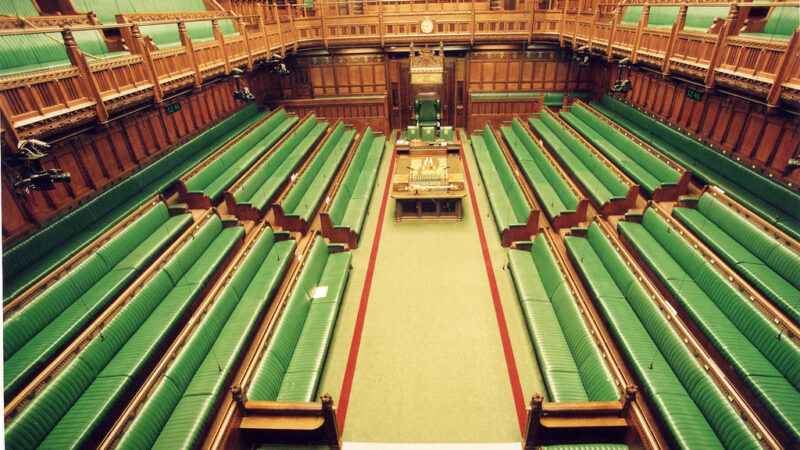
The House of Commons adopted two Amendments to its Brexit motion on Tuesday this week – the Brady Amendment to replace the Northern Ireland Backstop with “alternative arrangements”, and the Spelman/Dromey Amendment against a No Deal Brexit but lacking a mechanism to achieve that. The Cooper/Boles Amendment that would have actually give the Commons the mechanism to at least delay a No Deal Brexit by asking for an extension of the Article 50 negotiation period was defeated.
After all of this Jeremy Corbyn finally consented to meeting Theresa May to talk about Brexit. What they each said afterwards is significant.
Corbyn in this video said he had emphasized his plan to keep the UK in a permanent customs union with the EU and via that route have a say on trade deals (yes, this is a 🦄 but bear with me).
May by contrast underlined afterwards that the UK signing its own Trade Deals after Brexit – i.e. no permanent customs union (again, you might quibble with whether the Backstop entails a permanent CU, but the Tories around May think it does not – and that is the crucial point for now).
Let’s take these positions at face value, and work out what happens next on Brexit.
The next Meaningful Vote attempt is due to happen on 14th February. Which way does May try to play it?
The Brady Amendment – and the fact that it managed to unify the Tory Party behind it – clearly favours the unity of the Tory Party over all else. While what the “alternative arrangements” entail is unknown, this amendment managed to get the Brexit hardliners around Rees-Mogg to rally behind it. Brady himself was one of the 118 Tories who voted against the Brexit Deal in the first Meaningful Vote on 15th January. May’s comments after her meeting with Corbyn show she is still pursuing this course – Brexit without the backstop to keep the Tory Party together.
The problem of course is that the EU is not going to tolerate a Withdrawal Agreement without an Irish Backstop in it. It took less than 10 minutes after Tuesday’s Commons vote for the EU to rule out any changes to the Withdrawal Agreement. There are no plans for May to meet anyone in Brussels yet, and it strikes me as fruitless to even try – what does May want, and what can Brussels give?
Meanwhile there have been some tentative offers to bribe induce Labour MPs to back the Withdrawal Agreement by finding some funds for disadvantaged regions, a plan that has been largely knocked back (see this by Anna Turley MP). Perhaps a dozen or so Labour MPs might go for this. But there is no signal whatsoever that the Prime Minister is ready to head for a softer Brexit that would really be the way to get more Labour MPs to back her plan. Yet were May to do that, she would lose a whole slew of Tories for whom the Brexit on offer is not hard enough.
All this – and the current paralysis on other Brexit matters in Parliament – leads me to think that the vote in the Commons on 14th February is going to be much the same as it was on 14th January. The scale of defeat might be slightly smaller, but the Commons will not back May. The idea that May could somehow corral MPs to back a deal, to get them to see clearly now when they could not a month ago, is fanciful – with politics so partisan, the scale of her defeat in January so large, and May’s trust in the Commons so scarce, the wait-and-hope tactic cannot work.
Putting it another way, the Prime Minister cannot manage to keep the ERG and hard core Brexiters on side, and appeal to enough Labour MPs, and manage to do all of that within the established constraints of the Withdrawal Agreement agreed with the EU.
I conversely do not see there being a decision to consciously head for a No Deal Brexit after 14th February, but I do expect that is the point where more MPs in the House of Commons acknowledge that the UK is starting to run out of time, to run out of options.
The direction currently being pursued cannot work.
With just 6 weeks to go to Brexit in mid-February, and no prospect of a Deal that the Commons can back, No Deal becomes the default. It is then that other options – extending Article 50, rescinding Article 50 altogether, a referendum, and even an election, loom into view once more as alternatives to No Deal.
And even if the UK inches closer to No Deal, the route there is not a smooth one – if the prospect of a few centimetres of snow can make the British panic, how about the prospect of the ports blocking up and Brits needing to stockpile food? Or shortage of medicines?
Brexit is going to get a whole lot messier and nastier before it starts to get better, but on 14th February May’s approach is going to have hit the wall. And after that all other options are still open.
The inflexibility of the European Union ? The back stop proposal is the British Prime Minister’s proposal to resolve a problem created by Britain 100 years ago, namely the British imposed border in Ireland. . The Good Friday Agreement painfully crafted by Irish, British and American politicians and voted on in Ireland calmed the situation and brought peace and respect to Ireland and Northern Ireland . Remember the people of Northern Ireland voted to stay in the European Union. Not much respect for their wishes when their vote is discounted by the larger English electorate. But then Lord Palmerston’ dictum continues to apply – ” “Therefore I say that it is a narrow policy to suppose that this country or that is to be marked out as the eternal ally or the perpetual enemy of England. We have no eternal allies, and we have no perpetual enemies. Our interests are eternal and perpetual, and those interests it is our duty to follow.” Not the interests of the United Kingdom – but the interest of England !
Quite honestly, I see only two other options open:
A. A resolution to unilaterally repeal Art. 50;
B. A “no deal” Brexit with a possible minimalistic transitional customs clearance agreement (as long as the UK does not unilaterally adopt alternative technical standards, the kind of clearance procedures applied to Norway and Switzerland would be sufficient even under WTO rules) and a transitional MRA to avoid a complete disruption of supply chains.
All other options would require a renegotiation with the EU, which becomes less and less likely.
I am not British or European, but an interest observer from the other side of the world. The inflexibility of the EU to the impasse over the Irish backstop shows why Britain is better out of the EU. A no deal Brexit and a WTO approach ultimately leaves British consumers benefiting far more than it does the EU. To be brutally honest, these benefits accrue to British citizens from the continued unfettered arrival of EU goods via Ireland.. The major down side of no backstop progress to the UK will be that people can still move freely across the border, but at least those traveling from Northern Island to the rest of Britain can be screened in many respects by technology on arrival in Wales, Scotland or England. Rule Britannia – time for the EU to realise why the British people voted to Leave.