Correlation is not causation: why the government is protesting too much about Brits in Brussels
Here we go again. The next stage of the UK government’s effort to get more Brits into the EU institutions… is to try to skew the application system to assist Brits. Today’s FT has more on the story here. There’s more here about the government’s previous efforts.
The essential gist of the FT piece is that it’s the requirement to be able to speak a second language this is discouraging British applications, because so few Brits speak a second language. So remove the language requirement (i.e. make a special concours just for Brits) and all will be fine and dandy, and UK nationals will flood to Brussels.
Correlation, sure. But causation?
There are three essential issues that are not accounted for in this approach.
Firstly, there is a cultural aspect to language learning as well as a communications aspect. A person is going to be more inclined to work in a multi-lingual, multi-cultural environment if they can relate to that environment. I don’t care what language a person speaks – a Brit fluent in Farsi or Japanese is more likely to feel at ease in Brussels than one who speaks only English.
Secondly, the EU recruitment message is very much at odds with the rest of the UK government’s discourse about EU affairs. “Go and work in Brussels for an organisation that’s almost universally loathed and ridiculed” – oh, yes please, give me more! Add into this a healthy dose of anti-public administration sentiment in general in the UK and you do not have a ringing endorsement of a Commission career.
Thirdly, the jobs themselves in the Commission are not as good or as interesting as they should be. I know too many people who have found themselves battling a cumbersome bureaucratic system, working with demoralised colleagues, and facing a promotion system still too based on years of service and not enough based on merit.
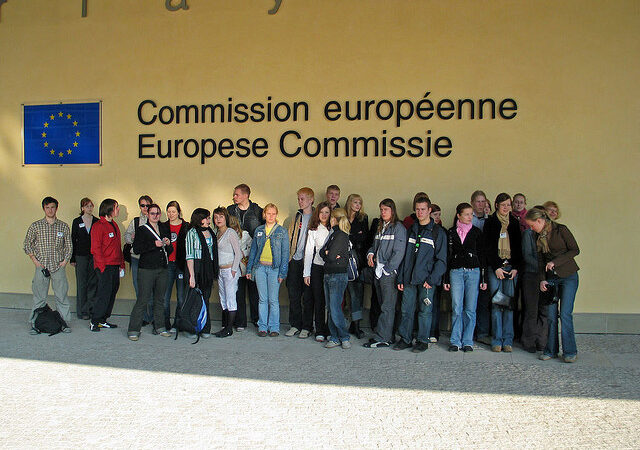
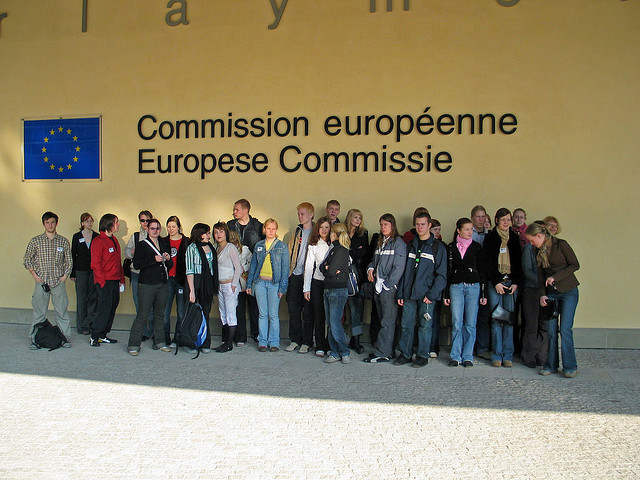
April 12, 2005 via Flickr, Creative Commons Attribution
But Jon, we know that unpaid internships are popular with the new establishment, why else would they have been auctioning them for party funds.
What do I hear for 6 months at MacDonalds?
Complete hypocrisy from the government! They should reconsider their decision to scrap all funding for UK students to attend the College of Europe, if they want more brits in the civil service.
In any case as reported in euobserver, recruitment policy is a legal matter. For the law to be changed, Parliament and the Council would have to approve, which seems unlikely. Thank god!
Rob, Frazer – thanks for the comments!
On the internships point – I am not sure I agree with you, at least in politics. Seems to me there are masses of internships going in Westminster, in the political environment at least, although in other areas of the economy I agree it might not be so prevalent.
Good points Jon – we made similar points on The Lobby (www.theeulobby.eu), but added into the mix the idea that internships do not fit the British education culture. I also back Frazer’s points, though I fear we are all voices in the wilderness…
So the UK government wants more Brits in Brussels – but consular services and passport renewal are now provided for “our convenience” in Paris….
It’s not the Commission rules that need to change to support Brits in Brussels – it’s the UK approach to the EU and the level of support to those in Brussels that needs changing!